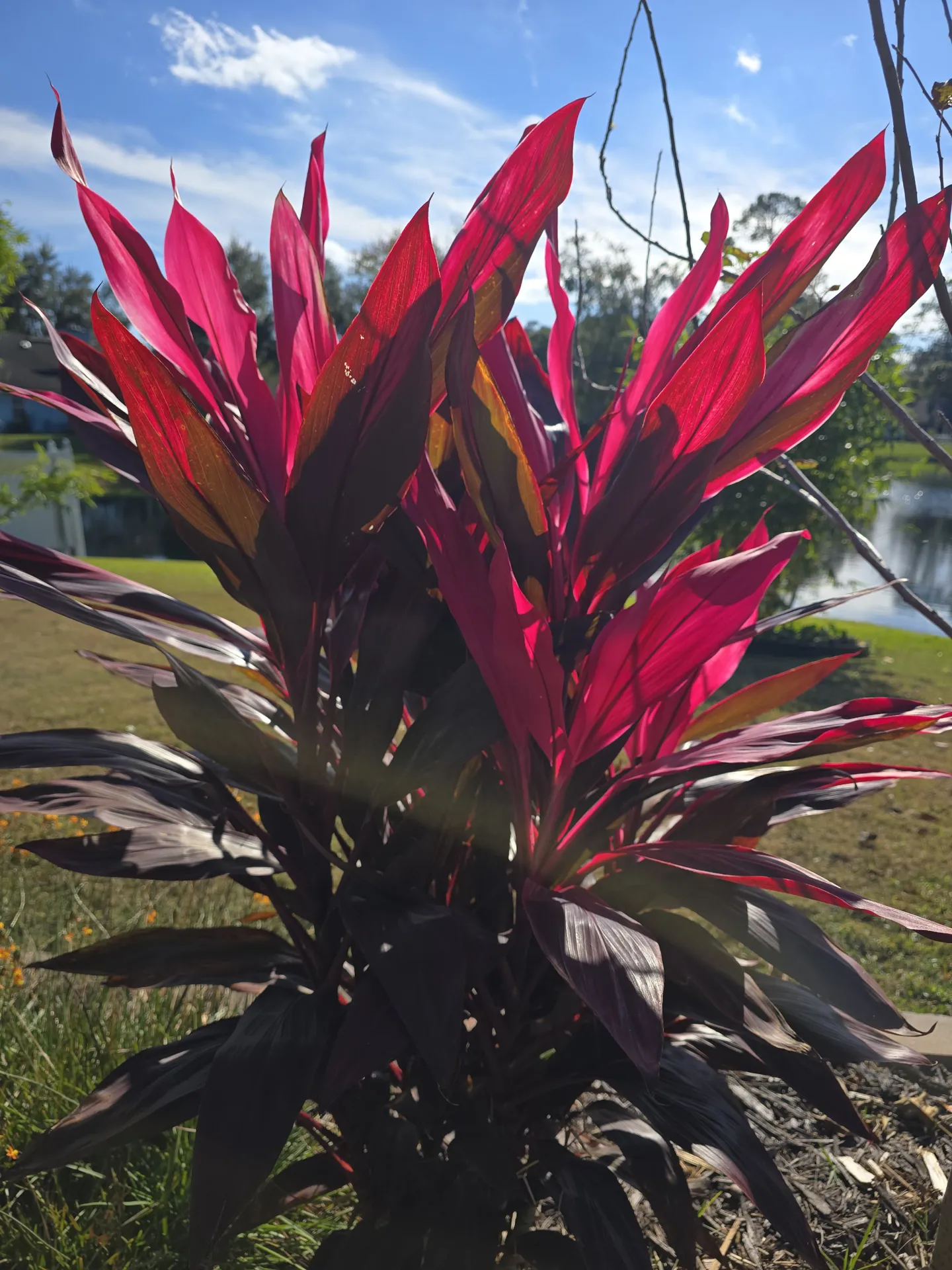
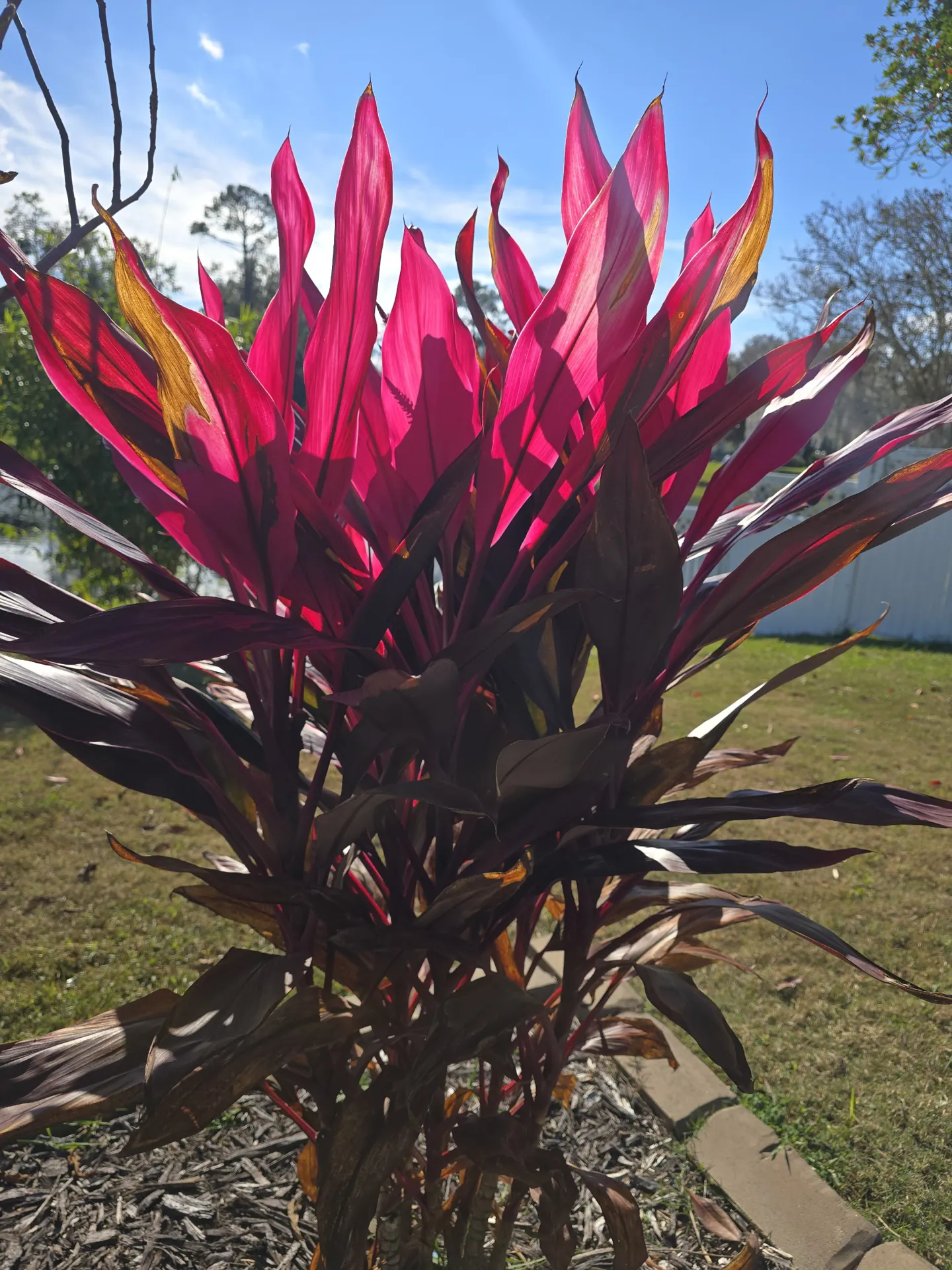
Ti plant is a tropical foliage shrub known for long, lance shaped leaves that range from deep green to red, burgundy, and variegated forms. It grows upright, responds well to pruning, and adapts easily to container growing.
Why people grow it
- Strong visual structure: bold leaves define space clearly.
- Color without flowers: interest comes from foliage alone.
- Durability: tolerates heat and regular handling.
- Cultural continuity: often grown near entrances and courtyards.
Cultural presence
Across Polynesian, Southeast Asian, and South Asian influenced regions, Ti plants have long been associated with protection, boundary marking, and everyday ritual. Leaves are used in ceremonies, offerings, and household traditions. In many homes, the plant is kept quietly, without explanation, because its presence is understood.
It is not a show plant. It is a staying plant.
What to expect
Ti plants grow steadily in warmth and bright light. Leaf color deepens with stronger light, while lower light produces greener tones. Older stems can be cut back to encourage fresh shoots from the base.
How we grow and ship it
We grow Ti plants in conditions similar to home environments so they transition smoothly after shipping. Plants are shipped actively growing. After arrival, give them warmth, light, and time before pruning.
Disambiguation & Cultural Notes
- Often mistaken for dracaena: Ti plants have broader cultural use and different growth behavior.
- Leaf color varies: light and temperature influence intensity.
- Not primarily ornamental: cultural use predates decorative gardening.
- Boundary plant: often placed near entrances, corners, or thresholds.
Practical Tips
- Bright light improves leaf color
- Water when top soil begins to dry
- Avoid cold drafts and frost
- Prune stems to encourage branching
- Works well in large pots