Plant profile
Details
Growth habit
Large, vigorous climbing vine
Mature size
25 ft tall • 10 ft wide
Climate fit
Perennial in Zones 9–11

Rangoon Creeper

Combretum indicum

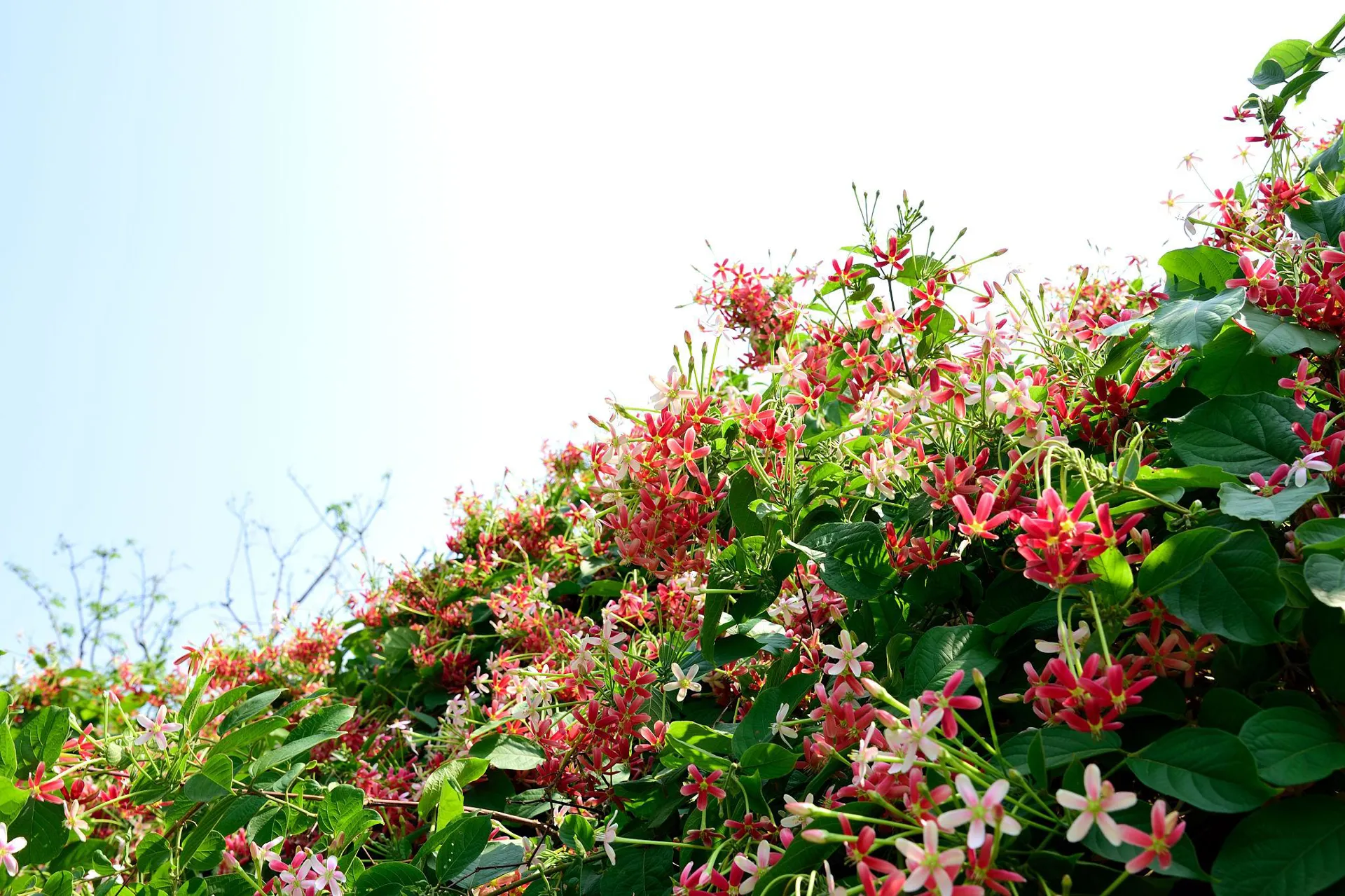
Rangoon Creeper is one of those plants people recognize before they recall its name. The vine that covered gates, softened compound walls, and changed color through the season, white to pink to deep red. For many, it marked the transition from afternoon heat to evening calm, when fragrance grew stronger and flowers seemed more alive.

Available pot sizes
Out of stock
We’ll restock when ready
Care basics
Light
Part sun
Water
Evenly moist
Soil
Sandy / fast-draining
Fertilizer
Moderate feeder
Pruning
Hard prune tolerated
Cold
Freeze sensitive

About this plant

Botanical snapshot
Genus Combretum
Species indicum
Family Combretaceae

Rangoon Creeper is a fast-growing flowering vine known for clusters of blooms that shift in color as they mature. The plant thrives in warm climates and, once established, creates a cascading presence that becomes part of the space rather than decoration.

Why people keep it

  • Color progression: flowers open white, deepen to pink, then turn red over time.
  • Evening fragrance: scent becomes more noticeable as the day cools.
  • Entrance plant: often grown near gates, pathways, and shared spaces.
  • Seasonal rhythm: blooms arrive in waves, signaling warmth and continuity.

What to expect

Rangoon Creeper grows vigorously once settled and benefits from support structures. Blooming often happens in flushes, with clusters appearing across the vine. Regular shaping helps manage direction without limiting growth.

How we grow and ship it

We grow Rangoon Creeper with strong root systems before encouraging rapid climb. Plants are shipped while actively growing. After transit, provide time for the vine to settle before training it onto supports.

Disambiguation & Cultural Notes

  • Name familiarity: many remember the plant visually rather than by name, often described as “the color-changing vine at the gate.”
  • Not typically ritualistic: unlike jasmine or tulsi, Rangoon Creeper is associated more with atmosphere than ceremony.
  • Shared spaces: the vine often belongs to neighborhoods as much as individual homes, extending across boundaries.
  • Memory anchor: for many, it represents houses that felt open, lived-in, and welcoming.

Practical Tips

  • Prefers bright sunlight for strong blooming.
  • Provide a trellis, fence, or support early.
  • Regular pruning encourages fuller branching.
  • Best planted where it has room to spread naturally.

Full care guide

The details behind the basics.
Light
Part sun
Grow Rangoon Creeper where it gets a solid half-day of direct sun. In hotter areas, prefer morning sun with some afternoon protection.
Water
Evenly moist
Keep Rangoon Creeper evenly moist. Water when the surface is just starting to dry; avoid both bone-dry swings and soggy soil.
Soil
Sandy / fast-draining
For Rangoon Creeper, a lighter, sandy mix helps prevent root issues. Water more often as needed since fast-draining mixes dry quicker.
Fertilizer
Moderate feeder
Feed Rangoon Creeper regularly during the growing season with a balanced fertilizer. Reduce or pause feeding when growth slows.
Pruning
Hard prune tolerated
Rangoon Creeper can handle a harder prune when needed. Cut back to healthy growth and allow time for recovery during the growing season.
Cold
Freeze sensitive
Rangoon Creeper will suffer below ~32°F. In cold climates, treat it as an annual or overwinter it indoors until frost danger passes.
Pests
Moderate risk
Rangoon Creeper can attract common pests under stress. Watch for early signs, maintain airflow, and avoid overwatering and low light.
Toxicity
Toxic if ingested
Rangoon Creeper may cause issues if ingested. Keep away from children and pets and seek help if ingestion occurs.