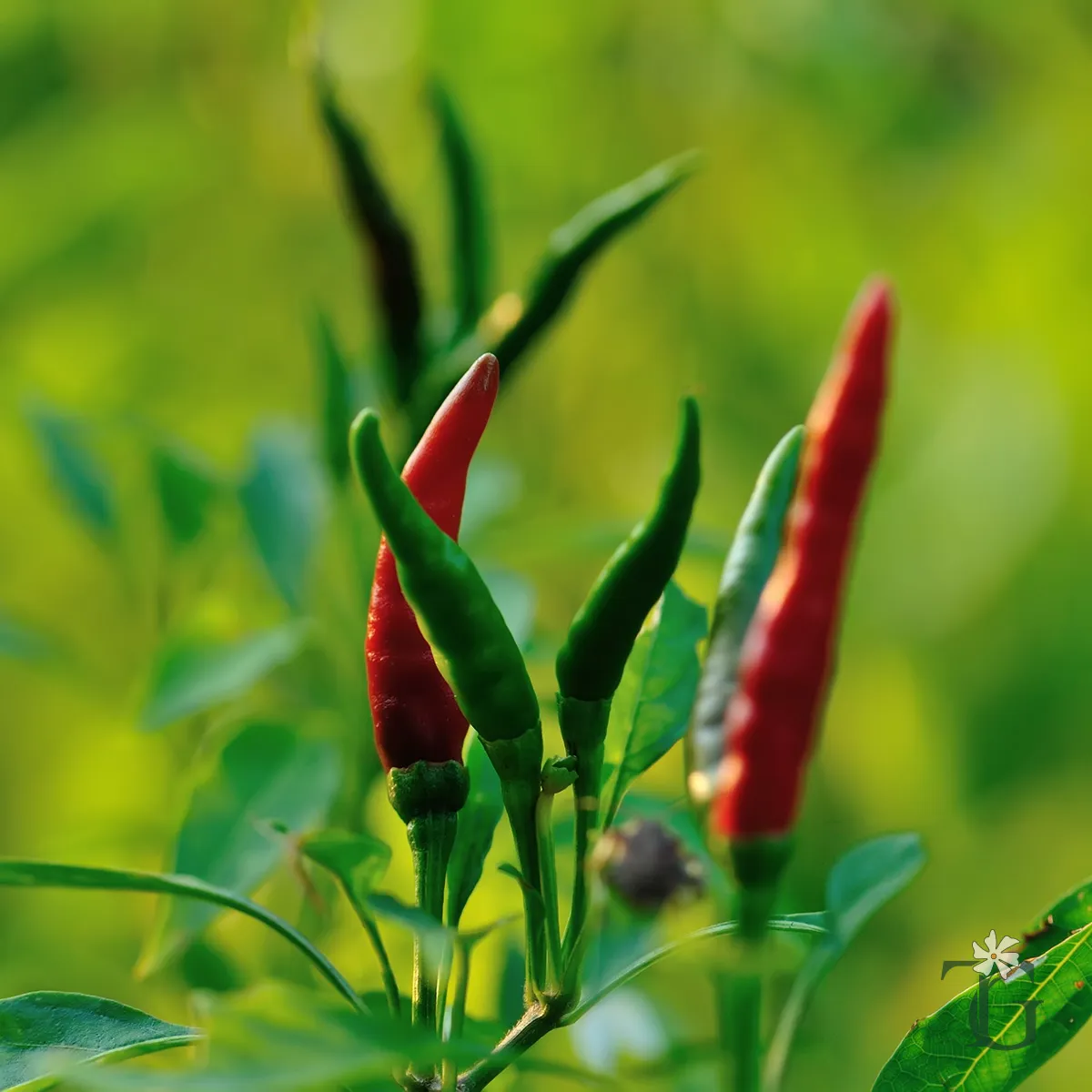
Peri Peri, also known as African bird’s eye chili, is a small, hot pepper used in coastal Indian cooking, especially in Goa, where it is valued for its clean heat and sharp flavor in masalas, marinades, and grilled dishes.
It is commonly used to build heat in spice pastes and sauces rather than being added whole in large quantities. The flavor is direct and bright, which makes it well suited for grilling and coastal-style preparations.
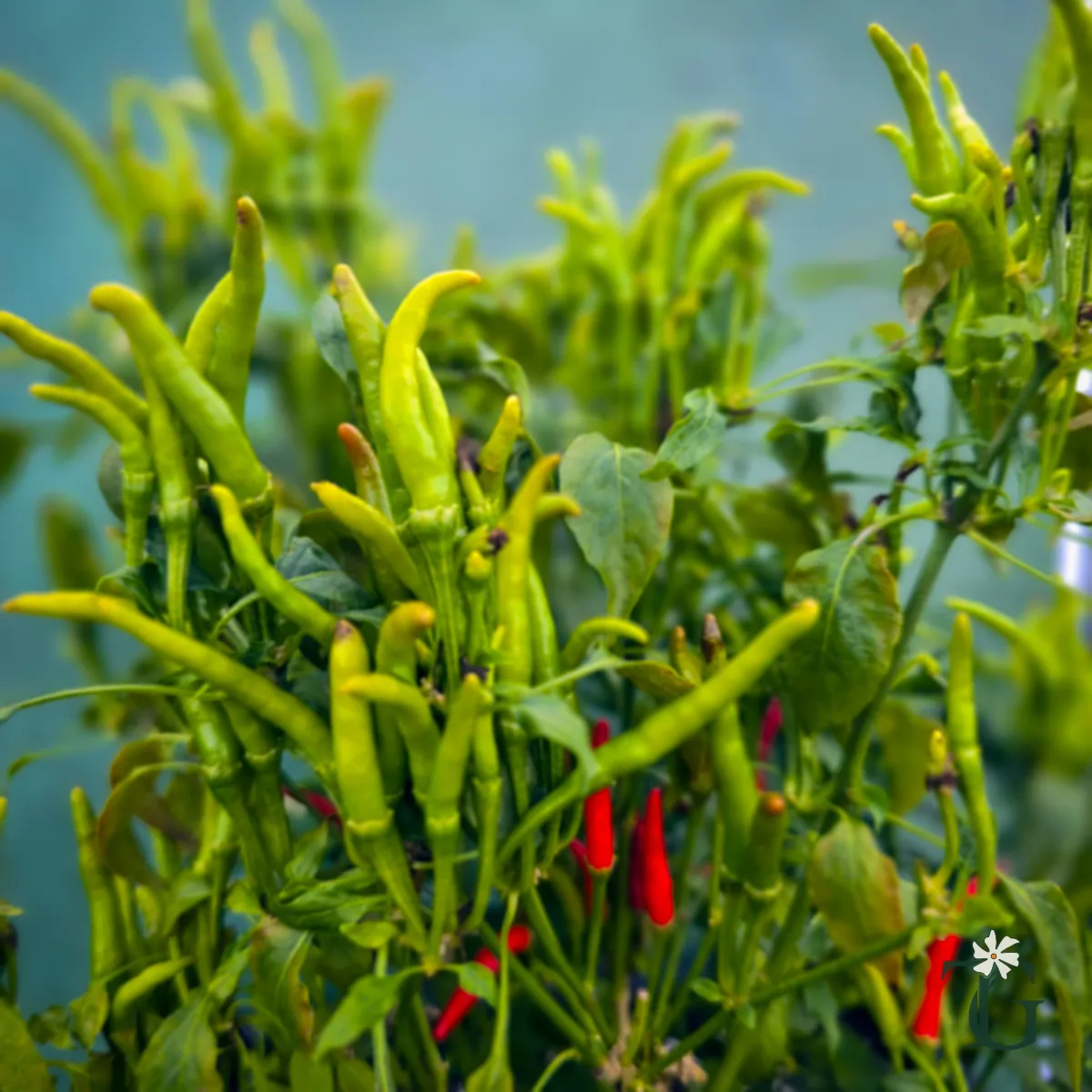
Fruits are small, upright, and typically harvested green or red. Both stages are usable, depending on the dish.
Seed stock is derived from established Capsicum frutescens lines selected for consistent heat and reliable growth.
Why people keep it
- Heat intensity: strong, sharp heat delivered in small quantities
- Flavor clarity: clean profile suited for marinades and spice bases
- Kitchen role: used for building heat, not bulk cooking
- Compact growth: fits well in containers and small spaces
What to expect
Peri Peri plants remain compact and branch readily under warm conditions. They produce clusters of small peppers that mature from green to red.
Regular harvesting encourages continued fruiting. Like most peppers, growth slows in cooler temperatures and resumes with warmth.
Fruit size remains small and consistent, with a focus on intensity rather than volume.
Heat level
Estimated Scoville: 50,000 to 100,000 SHU
For reference:
- Jalapeño: ~2,500 to 8,000 SHU
- Serrano: ~10,000 to 25,000 SHU
- Jwala: ~30,000 to 50,000 SHU
- Guntur Sannam: ~40,000 to 80,000 SHU
Peri Peri sits firmly in the hot range and is typically used in small quantities.
How we grow and ship it
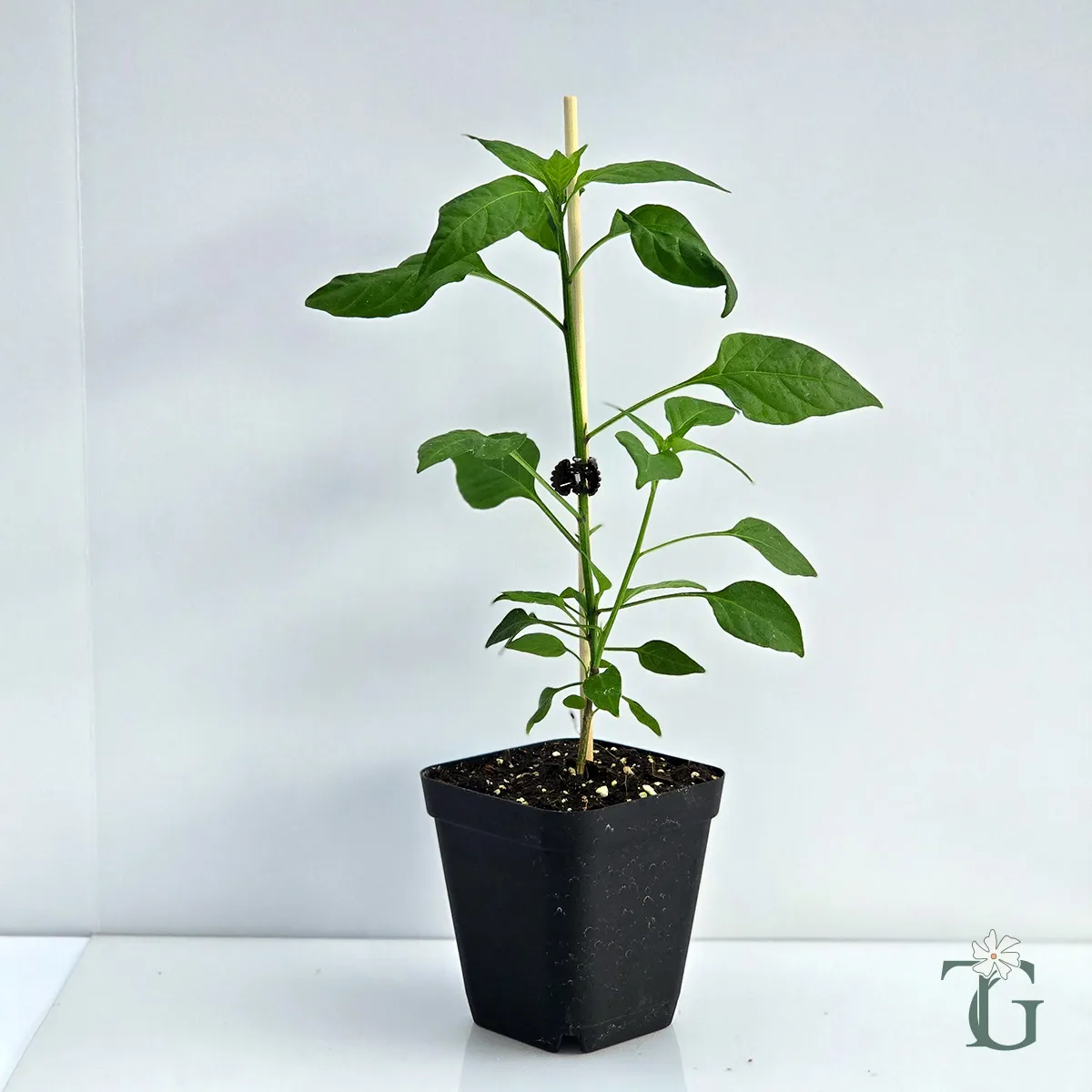
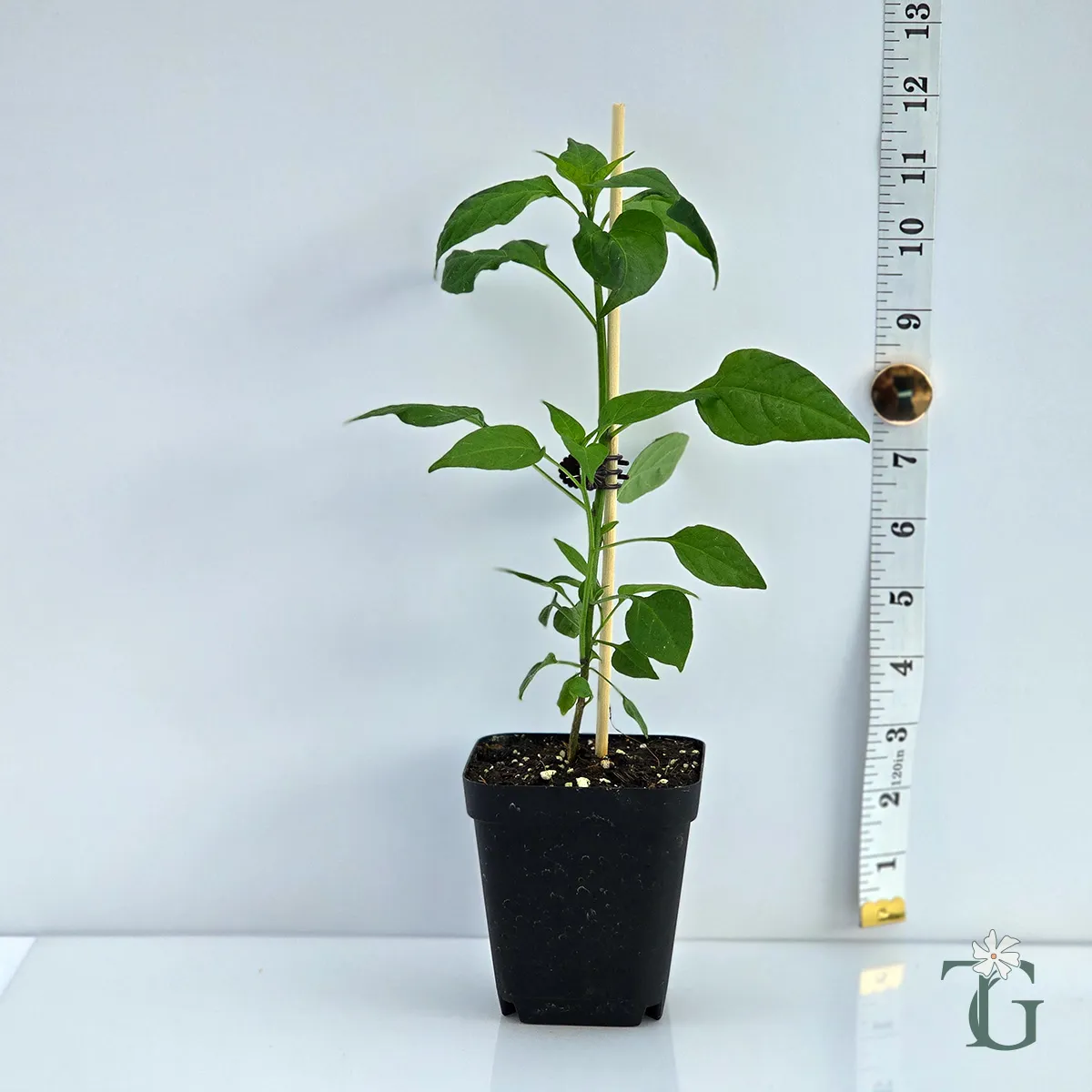
We ship actively growing plants that are still in their establishment phase rather than oversized specimens. This helps the plant adapt better after transplant.
Some leaf softening during transit is normal. With strong light and steady watering, the plant stabilizes quickly and resumes growth.
Practical Tips
- Use sparingly, this is a high-heat chili
- Harvest regularly to maintain production
- Provide full sun for best yield and flavor
- Avoid overwatering, peppers prefer controlled moisture
- Allow fruits to ripen to red for deeper heat
Peri Peri is suited for growers who want a compact, high-heat chili that plays a precise role in cooking. It performs well in containers and integrates naturally into grilling, marinades, and spice-forward dishes.