Plant profile
Details
Growth habit
Hardy climbing vine
Mature size
15 ft tall • 6 ft wide
Climate fit
Perennial in Zones 7–11

Passion Vine – Passiflora caerulea

Passiflora caerulea

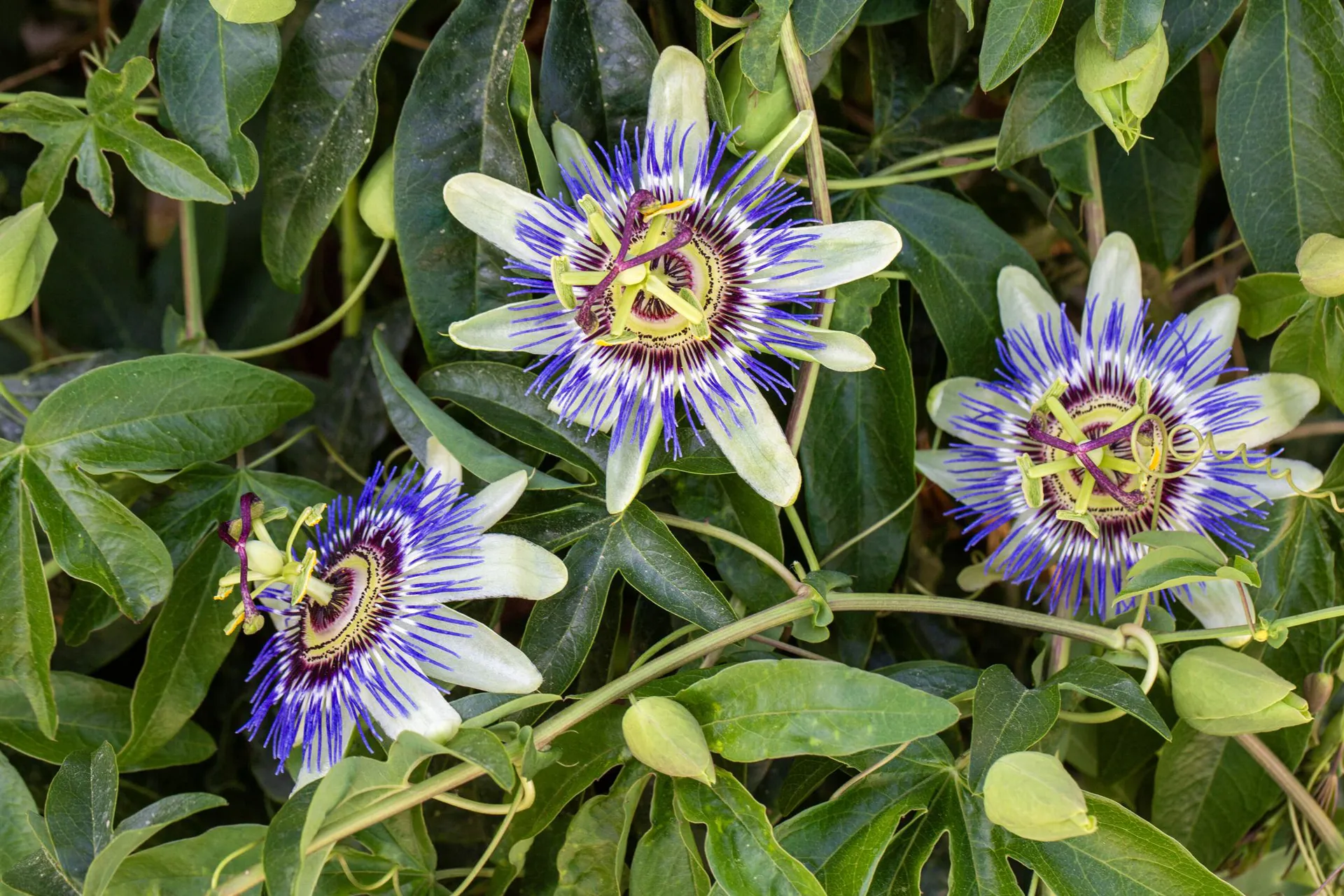
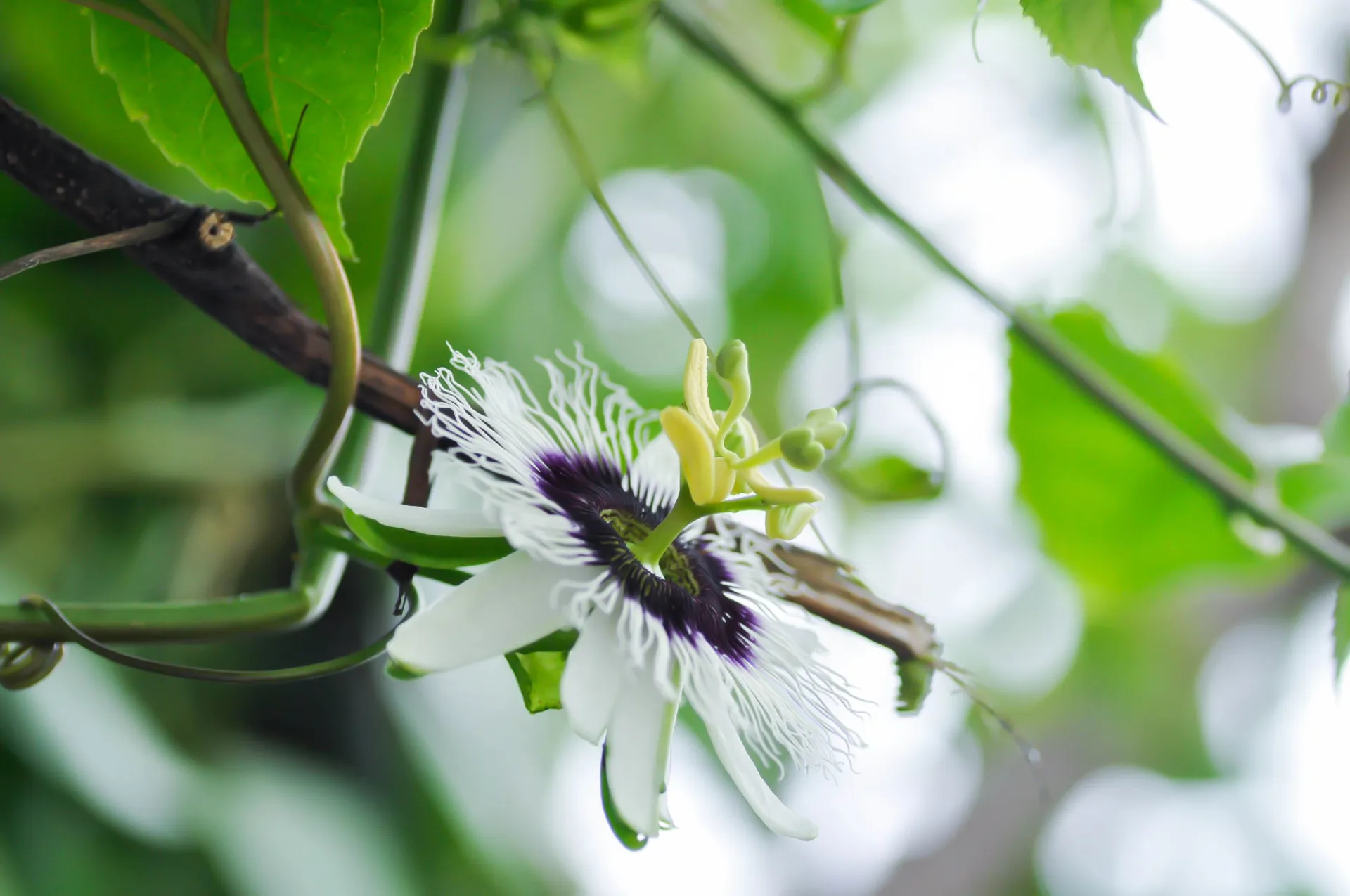
Passiflora caerulea is often chosen for its blue and white blooms that feel both detailed and serene. Compared to more tropical passion vines, it carries a slightly cooler visual tone while still offering the same sense of movement and transformation that climbers bring to a space. It is a plant people grow when they enjoy watching a vine slowly claim its support and reward patience with distinctive flowers.

Available pot sizes
Out of stock
We’ll restock when ready
Care basics
Light
Full sun
Water
Evenly moist
Soil
Sandy / fast-draining
Fertilizer
Moderate feeder
Pruning
Hard prune tolerated
Cold
Brief light frost tolerated

About this plant

Botanical snapshot
Genus Passiflora
Species caerulea
Family Passifloraceae

Passiflora caerulea is a flowering climbing vine recognized for layered blue, white, and purple tones in its blooms. It adapts well to trellises, fences, and balcony supports where it can grow with direction.

Why people grow it

  • Distinctive color palette: cooler tones that stand out without overwhelming.
  • Intricate structure: flowers invite close observation.
  • Steady climber: grows with confidence once established.
  • Space softening: turns rigid structures into living surfaces.

Cultural presence

Passion flowers have long captured attention for their layered symbolism and striking design. Passiflora caerulea is often grown in home gardens where visual interest and seasonal change are appreciated as much as the act of gardening itself.

What to expect

This vine may begin slowly while roots establish. With consistent light and warmth, growth becomes more active and flowering follows. Occasional pruning helps guide its spread and encourages fuller coverage.

How we grow and ship it

We grow Passiflora caerulea with early structural support so it transitions smoothly into home settings. Plants are shipped rooted and actively growing. After arrival, provide light and stability before shaping or relocating.

Disambiguation & Cultural Notes

  • Often mistaken for other passionflower varieties: bloom color and pattern help distinguish it.
  • Climate influence: cooler regions may affect growth speed and flowering cycles.
  • Ornamental focus: typically grown for flowers rather than fruit.
  • Tendril climber: attaches gently to supports through natural wrapping.

Practical Tips

  • Provide trellis or support early
  • Prefers full to partial sun
  • Allow soil to dry slightly between watering
  • Light pruning encourages branching
  • Protect from extended frost

Full care guide

The details behind the basics.
Light
Full sun
Grow Blue Passion Vine in full sun for best vigor and flowering. In extreme heat, provide consistent watering and consider light afternoon shade.
Water
Evenly moist
Keep Blue Passion Vine evenly moist. Water when the surface is just starting to dry; avoid both bone-dry swings and soggy soil.
Soil
Sandy / fast-draining
For Blue Passion Vine, a lighter, sandy mix helps prevent root issues. Water more often as needed since fast-draining mixes dry quicker.
Fertilizer
Moderate feeder
Feed Blue Passion Vine regularly during the growing season with a balanced fertilizer. Reduce or pause feeding when growth slows.
Pruning
Hard prune tolerated
Blue Passion Vine can handle a harder prune when needed. Cut back to healthy growth and allow time for recovery during the growing season.
Cold
Brief light frost tolerated
Blue Passion Vine can tolerate a brief light frost, but extended cold will cause damage. Protect it during prolonged cold snaps.
Pests
Watch aphids / mites
Keep an eye out for aphids and spider mites on Blue Passion Vine, especially in warm, dry conditions. Increase airflow and treat early if needed.
Toxicity
Pet safe (generally)
Based on commonly available references, Blue Passion Vine is generally considered pet-safe. As always, discourage chewing and monitor sensitive pets.