Plant profile
Details
Growth habit
Small flowering tree or large shrub
Mature size
20 ft tall • 10 ft wide
Climate fit
Perennial in Zones 9–11

Parijaat (Night-Flowering Jasmine)

Nyctanthes arbor-tristis

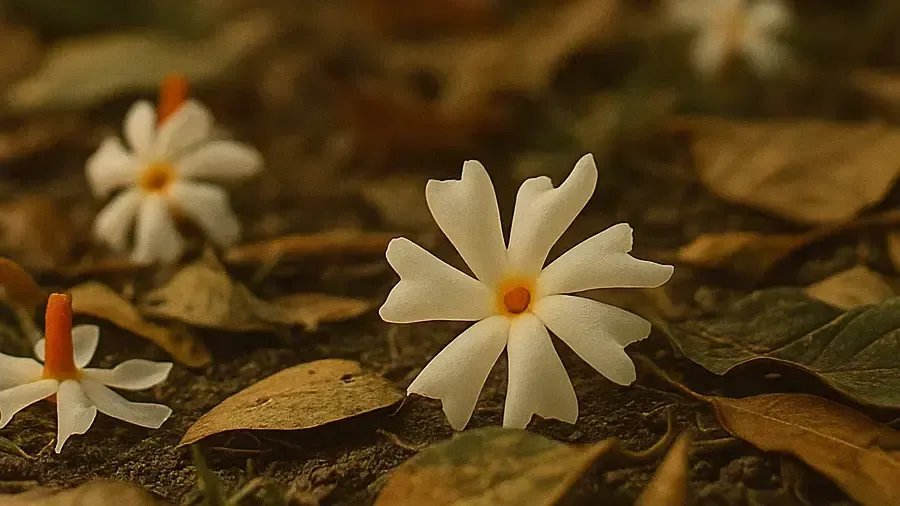
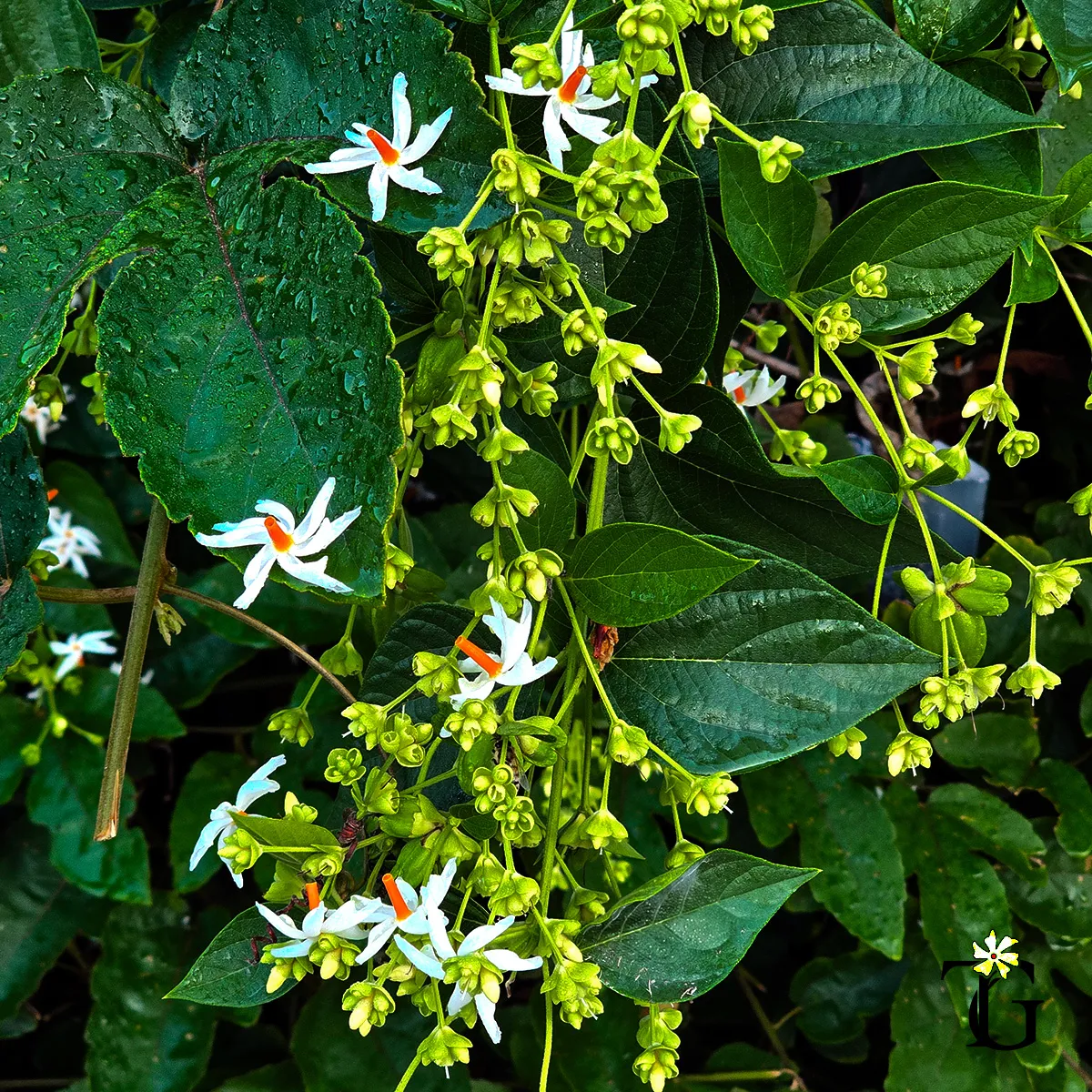
Parijaat is known for flowers that open at night and fall by morning, leaving a small circle of white and orange beneath the plant. For many, this is not just a bloom cycle, it is a memory of evenings, courtyards, and the habit of stepping outside at dawn to gather what the tree has offered. This is not an impulse plant, it settles slowly and becomes part of daily rhythm.

Available pot sizes
Out of stock
We’ll restock when ready
Care basics
Light
Full sun
Water
Evenly moist
Soil
Moisture-retentive but draining
Fertilizer
Light feeder
Pruning
Minimal pruning
Cold
Hard-freeze sensitive
Tags
pooja puja Outdoor Full sun Fragrant

About this plant

Botanical snapshot
Genus Nyctanthes
Species arbor-tristis
Family Oleaceae

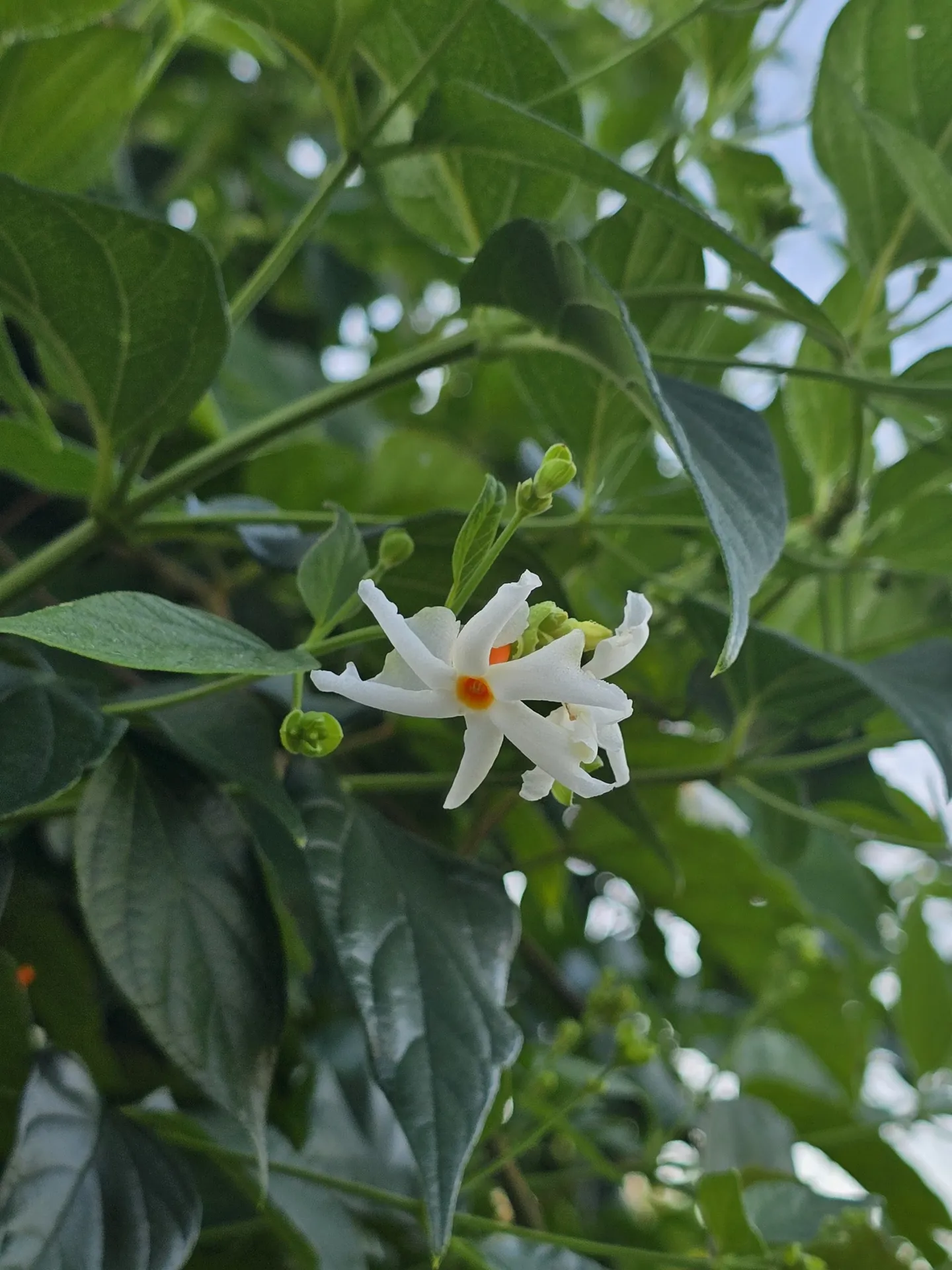
Parijaat, commonly identified as Nyctanthes arbor-tristis, is a small tree or large shrub valued for its night-blooming flowers with white petals and an orange center. Flowers open after dusk, release a gentle fragrance through the night, and fall by morning rather than staying on the branch.

Why people keep it

  • Fragrance at night: the scent often draws people outside just to check if it bloomed.
  • Nostalgia: for many households, Parijaat is tied to memories of shared routines and quiet mornings.
  • Quiet presence: it is not a showy plant, its reputation grows over time.

What to expect

Parijaat takes time to establish before flowering heavily. It may pause after shipping or repotting, this is normal. Once settled, blooming often comes in cycles rather than continuously. Flowers typically drop by morning, forming a small ring beneath the plant. Growth is steady and improves with consistency rather than intervention.

How we grow and ship it

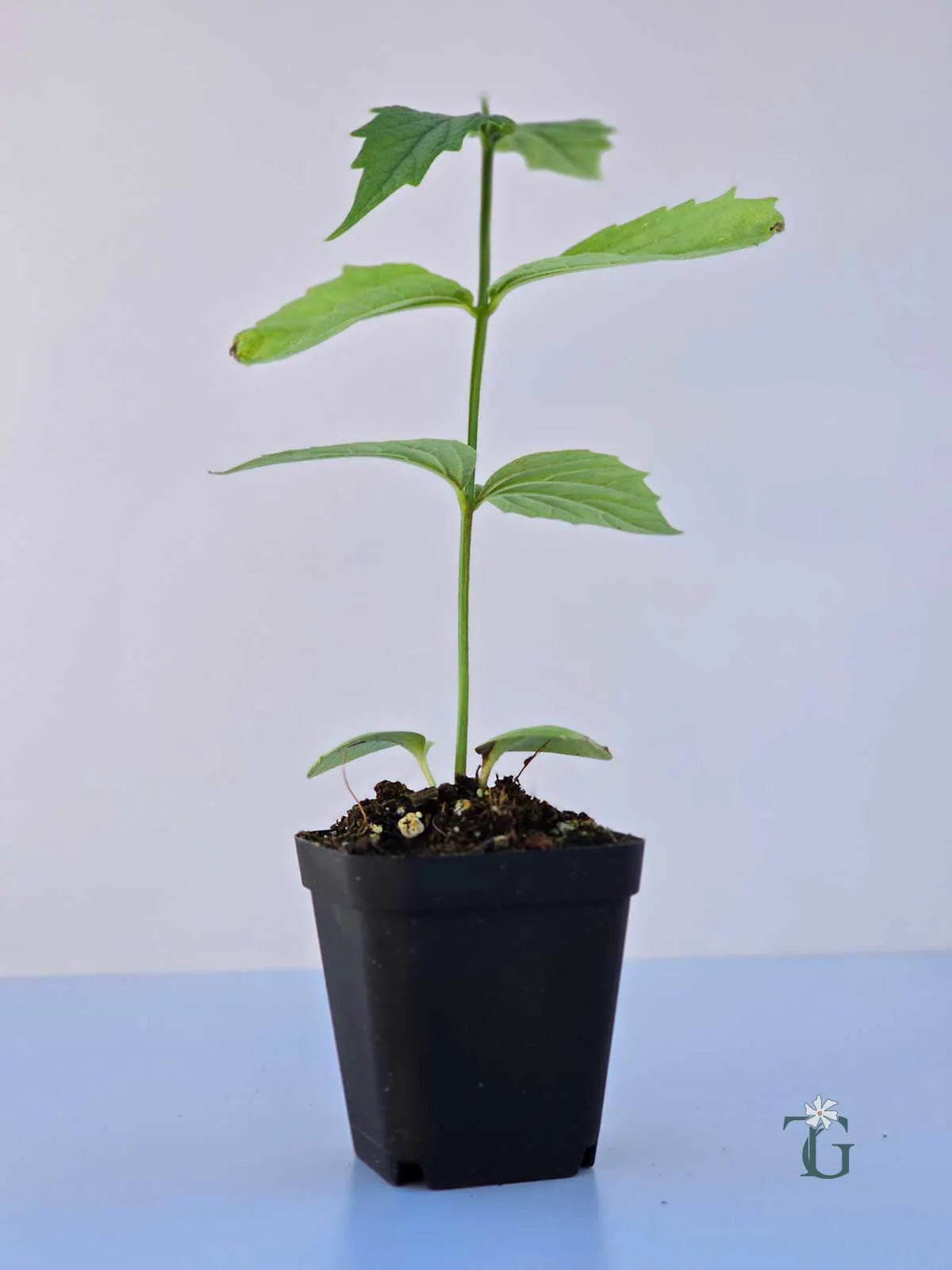
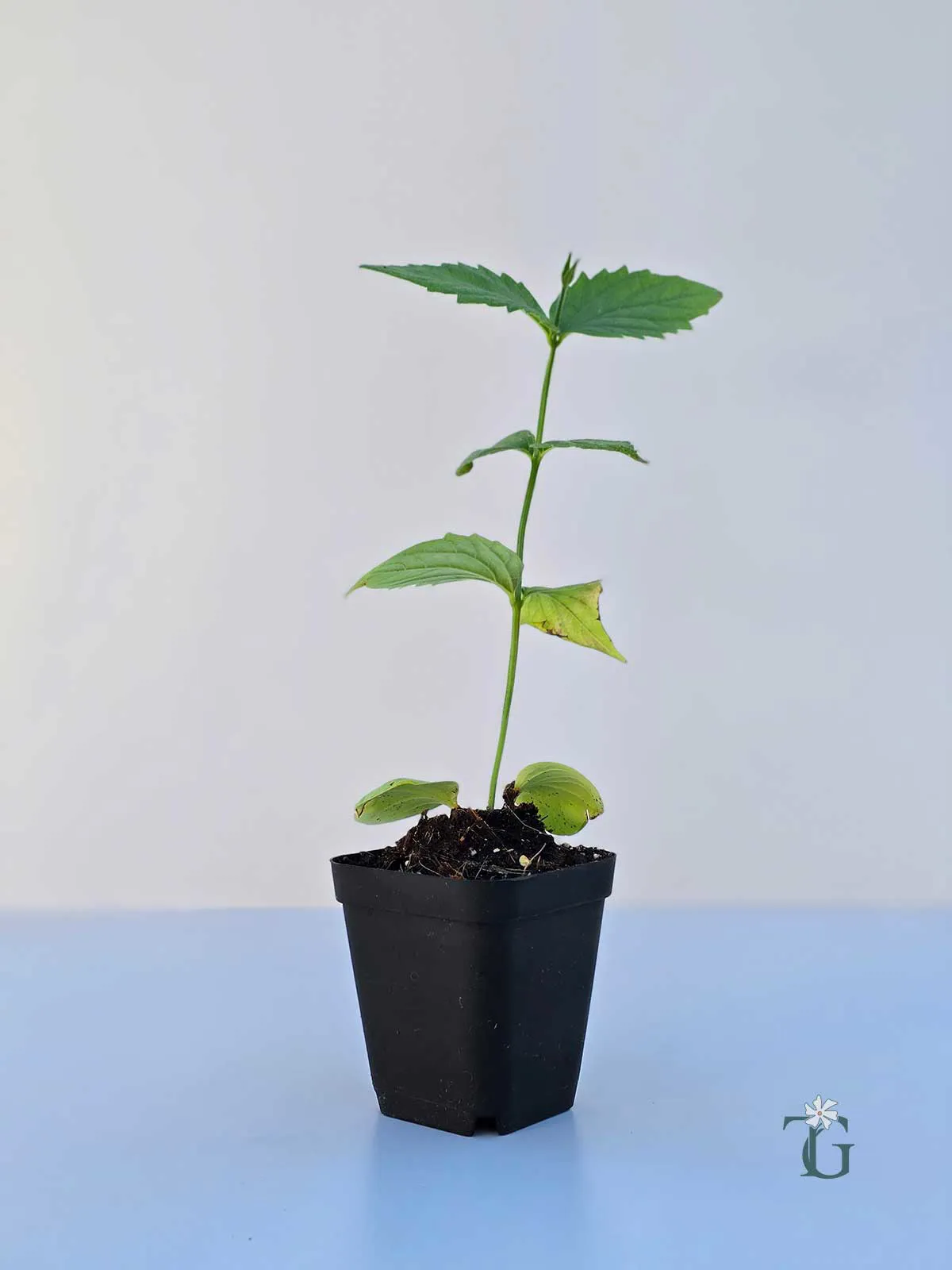
We grow Parijaat with attention to root health and gradual acclimation. Plants are shipped when actively growing rather than forced into bloom. After transit, allow the plant to adjust before repotting or pruning. Stability supports recovery more than quick adjustments.

Practical Tips

  • Place where fallen flowers can be easily gathered.
  • Morning light and steady warmth encourage stronger growth.
  • Avoid overwatering, roots respond best to a predictable rhythm.
  • Patience is part of growing Parijaat, flowering improves as the plant matures.

Full care guide

The details behind the basics.
Light
Full sun
Grow Parijaat in full sun for best vigor and flowering. In extreme heat, provide consistent watering and consider light afternoon shade.
Water
Evenly moist
Keep Parijaat evenly moist. Water when the surface is just starting to dry; avoid both bone-dry swings and soggy soil.
Soil
Moisture-retentive but draining
Parijaat likes soil that holds moisture while still draining freely. Think airy mix with organic matter plus perlite/pumice for structure.
Fertilizer
Light feeder
Parijaat needs only light feeding. Use a diluted balanced fertilizer occasionally during active growth and back off in cooler months.
Pruning
Minimal pruning
Parijaat needs little pruning—remove dead, damaged, or crossing stems and shape lightly as needed.
Cold
Hard-freeze sensitive
Parijaat may handle cool weather but can die back or be killed by a hard freeze. Provide protection or plan to overwinter indoors.
Pests
Moderate risk
Parijaat can attract common pests under stress. Watch for early signs, maintain airflow, and avoid overwatering and low light.
Toxicity
Toxicity unknown
Toxicity information for Parijaat is not confirmed. Treat it cautiously around pets and children until verified.