Plant profile
Details
Growth habit
Twining tropical vine
Mature size
10 ft tall • 4 ft wide
Climate fit
Perennial in Zones 10–11

Mandevilla (Red, Pink, White)

Mandevilla spp.

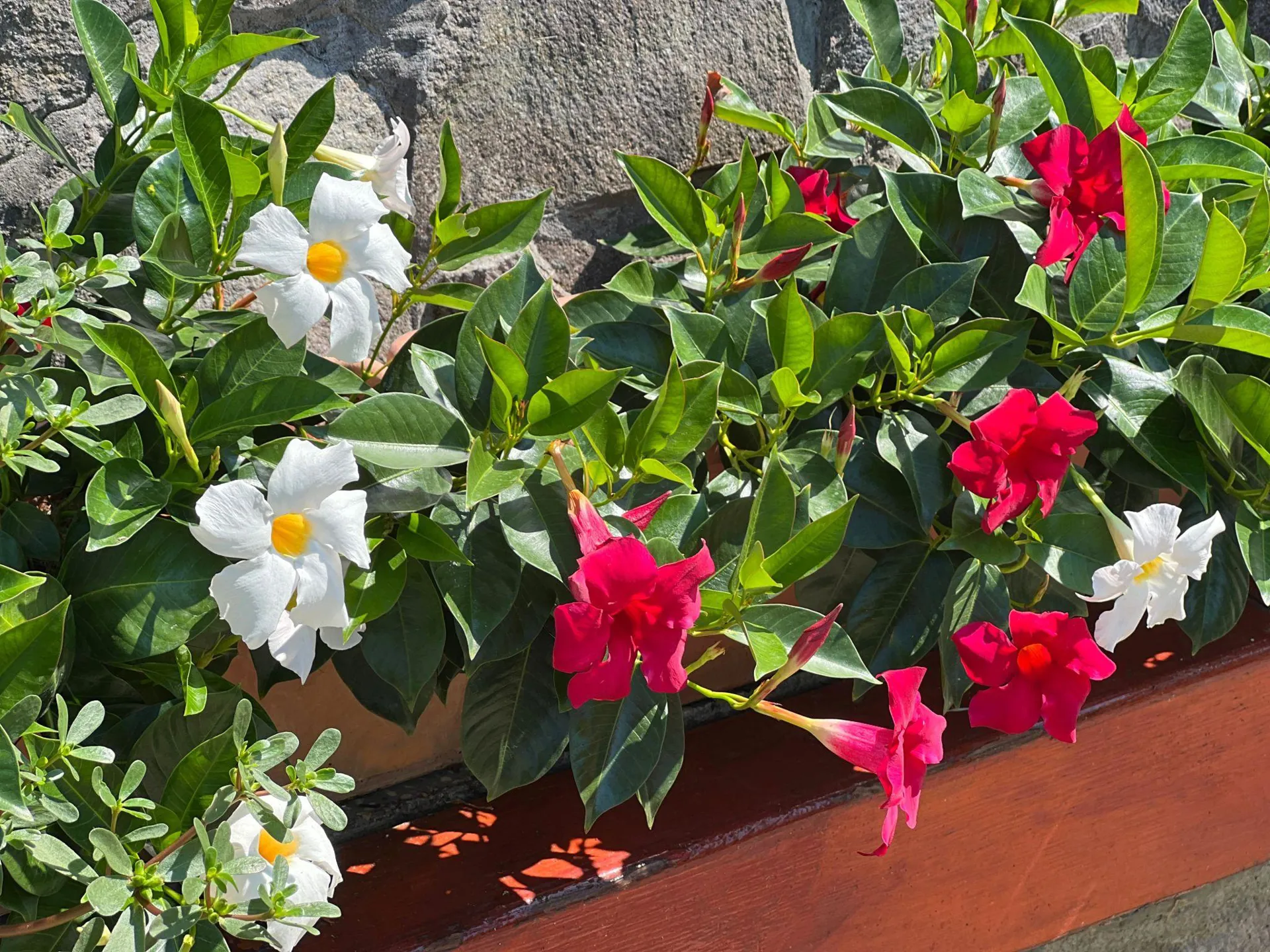
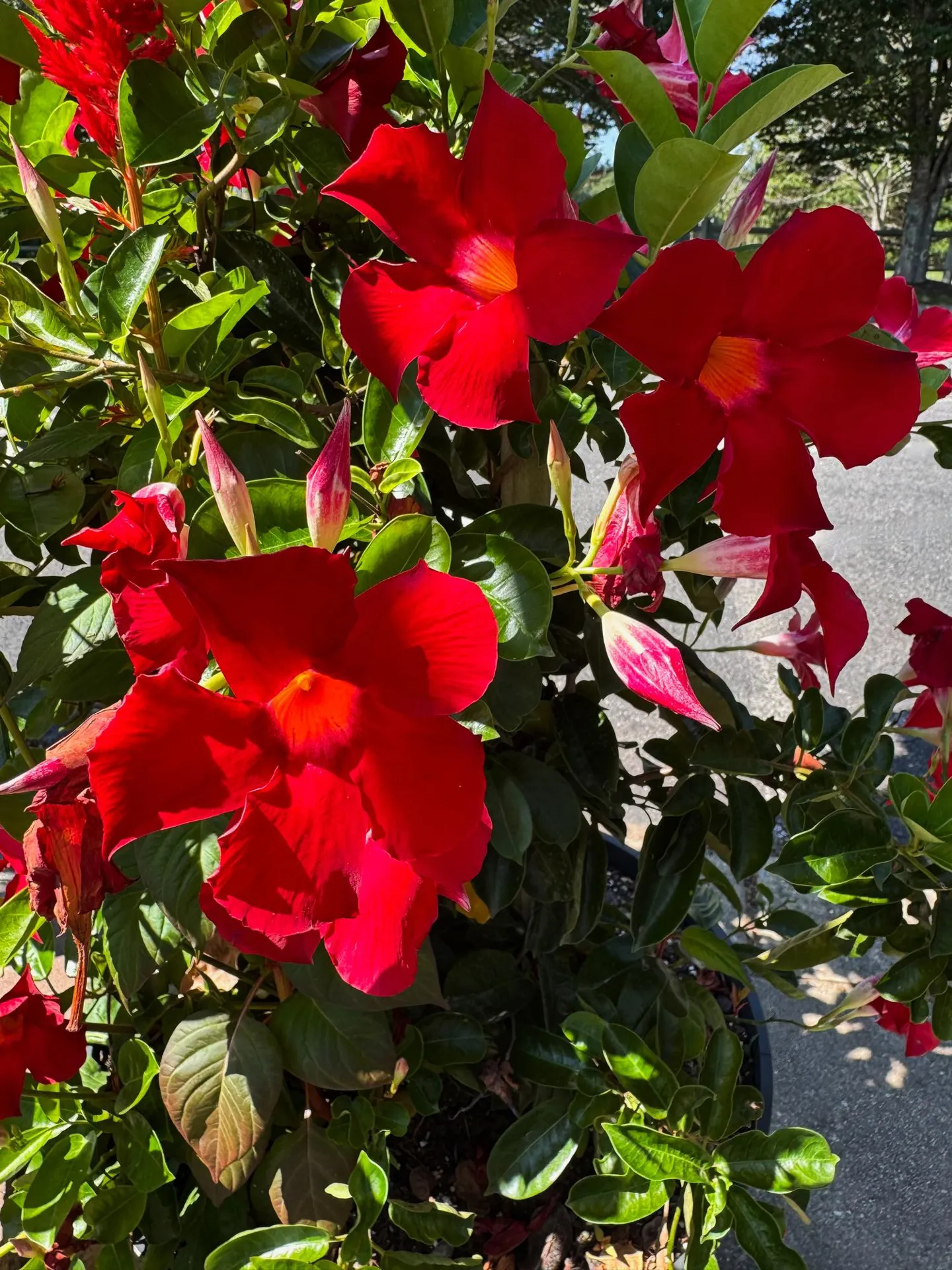
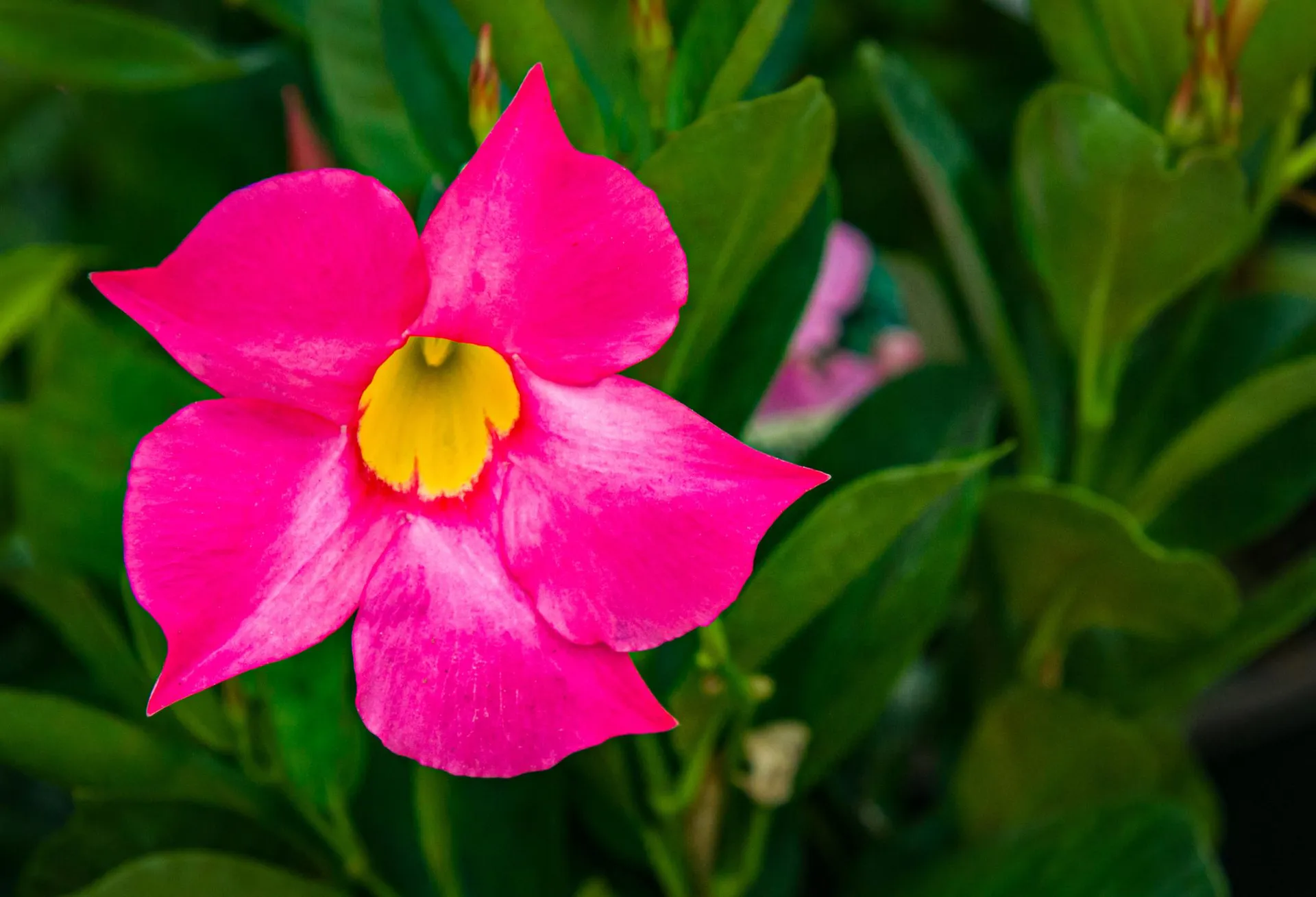
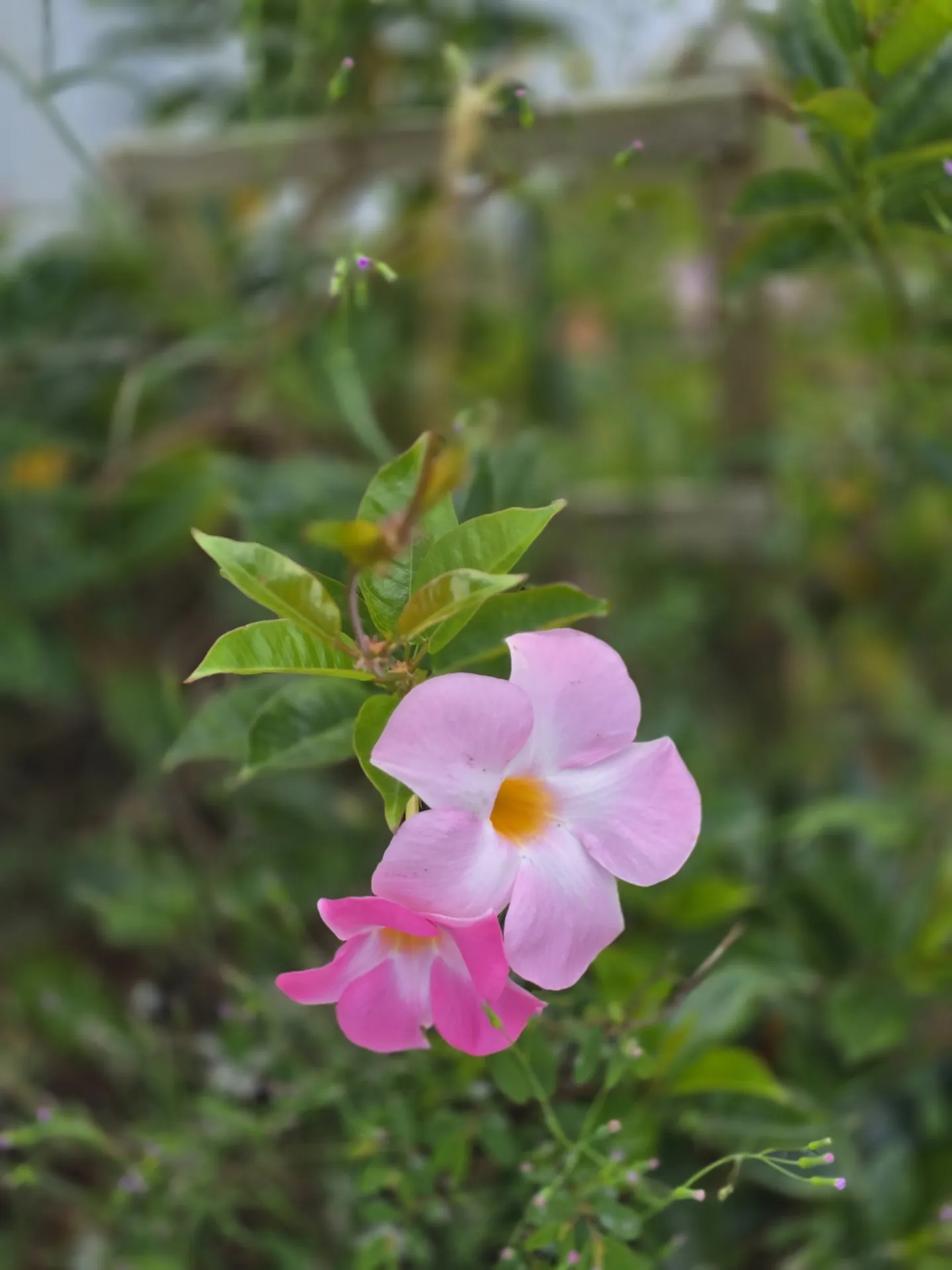
Mandevilla is grown for its trumpet shaped flowers and its ability to quickly transform railings, trellises, and patio spaces. Whether red, pink, or white, the blooms carry a clean, tropical presence that feels both lively and approachable. It is often chosen by gardeners who want visible progress through the season and a vine that responds clearly to care.

Available pot sizes
Out of stock
We’ll restock when ready
Care basics
Light
Part sun
Water
Evenly moist
Soil
Rich, loamy
Fertilizer
Heavy feeder
Pruning
Prune after bloom
Cold
Freeze sensitive

About this plant

Botanical snapshot
Genus Mandevilla
Species sanderi
Family Apocynaceae

Mandevilla is a warm weather climbing vine known for glossy foliage and repeat blooming. It adapts well to containers and open ground where sunlight is reliable and support is available.

Why people grow it

  • Strong color impact: flowers remain vibrant even in bright sun.
  • Fast coverage: climbs readily when guided.
  • Season long interest: blooms repeatedly through warm months.
  • Patio friendly: performs well in pots with support.

Color forms

  • Red: bold, energetic, draws attention easily
  • Pink: softer, blends naturally with mixed plantings
  • White: clean, understated, works well in structured spaces

All three share the same growth behavior and care patterns.

Cultural presence

Mandevilla is grown primarily for visual enjoyment rather than ritual association. In many homes, it represents the arrival of warm weather and outdoor living, balconies opening up, patios becoming active, and spaces gaining color again.

What to expect

This vine grows best in consistent warmth and bright light. Early growth may focus on establishing roots, followed by quicker climbing and flowering. Light pruning encourages branching and a fuller look.

How we grow and ship it

We grow mandevilla with early support so it transitions smoothly into home environments. Plants are shipped actively growing. After arrival, give it light and stability before shaping or repotting.

Disambiguation & Cultural Notes

  • Often confused with dipladenia: mandevilla typically has a more climbing growth habit.
  • Color variation: bloom shade may shift slightly with light and temperature.
  • Warm climate preference: flowering slows noticeably in cooler conditions.
  • Container friendly: widely used in balcony and patio gardening.

Practical Tips

  • Provide trellis or support early
  • Full sun encourages heavier blooming
  • Allow soil to dry slightly between watering
  • Feed lightly during active growth
  • Protect from frost

Full care guide

The details behind the basics.
Light
Part sun
Grow Mandevilla where it gets a solid half-day of direct sun. In hotter areas, prefer morning sun with some afternoon protection.
Water
Evenly moist
Keep Mandevilla evenly moist. Water when the surface is just starting to dry; avoid both bone-dry swings and soggy soil.
Soil
Rich, loamy
Mandevilla prefers rich, loamy soil with good structure. Add compost or organic matter, but keep drainage strong.
Fertilizer
Heavy feeder
Mandevilla benefits from consistent feeding during active growth. Use a balanced fertilizer and watch for salt buildup in containers.
Pruning
Prune after bloom
Prune Mandevilla after flowering to shape it and encourage new growth. Avoid heavy pruning right before the main bloom period.
Cold
Freeze sensitive
Mandevilla will suffer below ~32°F. In cold climates, treat it as an annual or overwinter it indoors until frost danger passes.
Pests
Watch aphids / mites
Keep an eye out for aphids and spider mites on Mandevilla, especially in warm, dry conditions. Increase airflow and treat early if needed.
Toxicity
Toxic to pets
Mandevilla may be toxic to pets if chewed or ingested. Keep it out of reach and contact a vet if ingestion is suspected.