Plant profile
Details
Growth habit
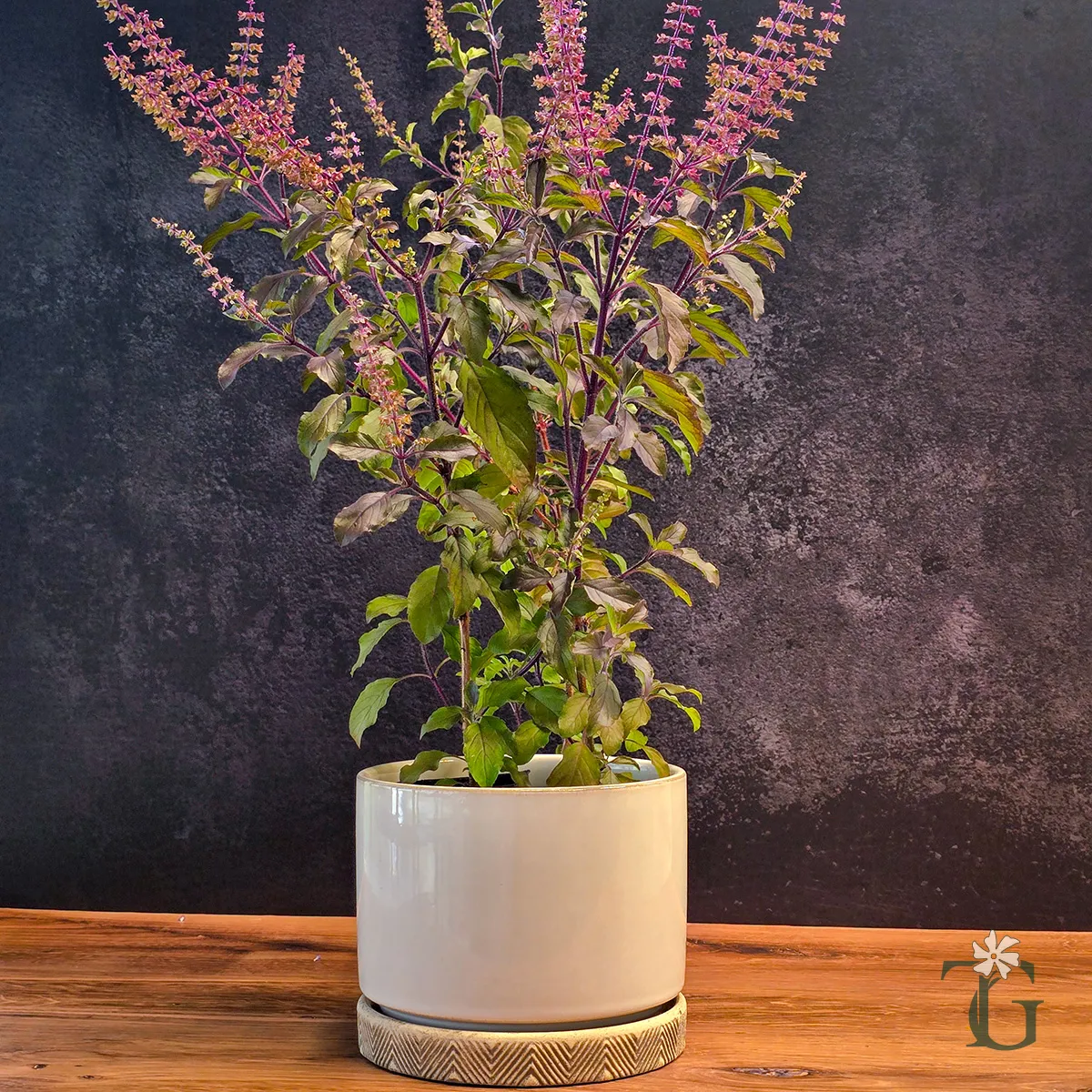
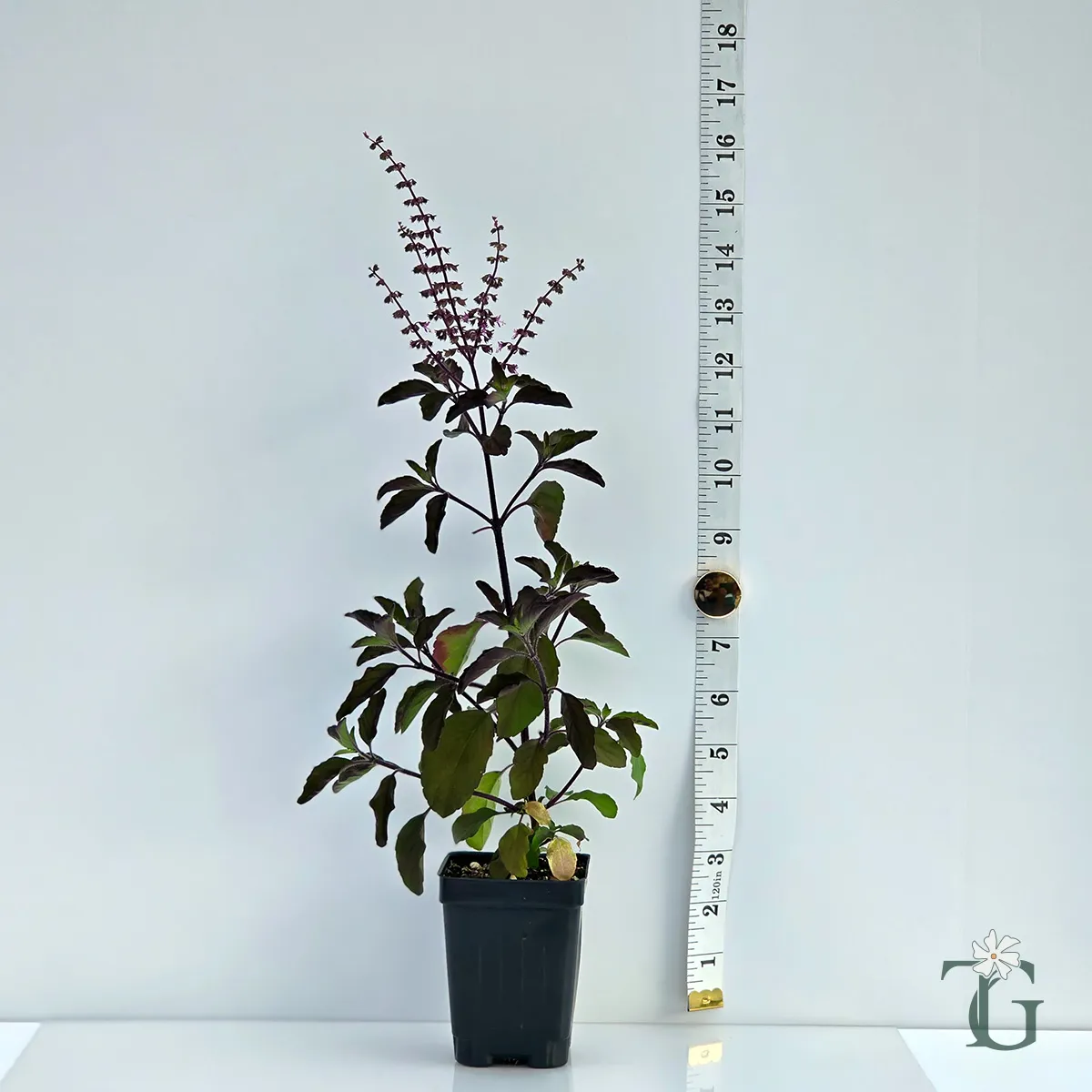
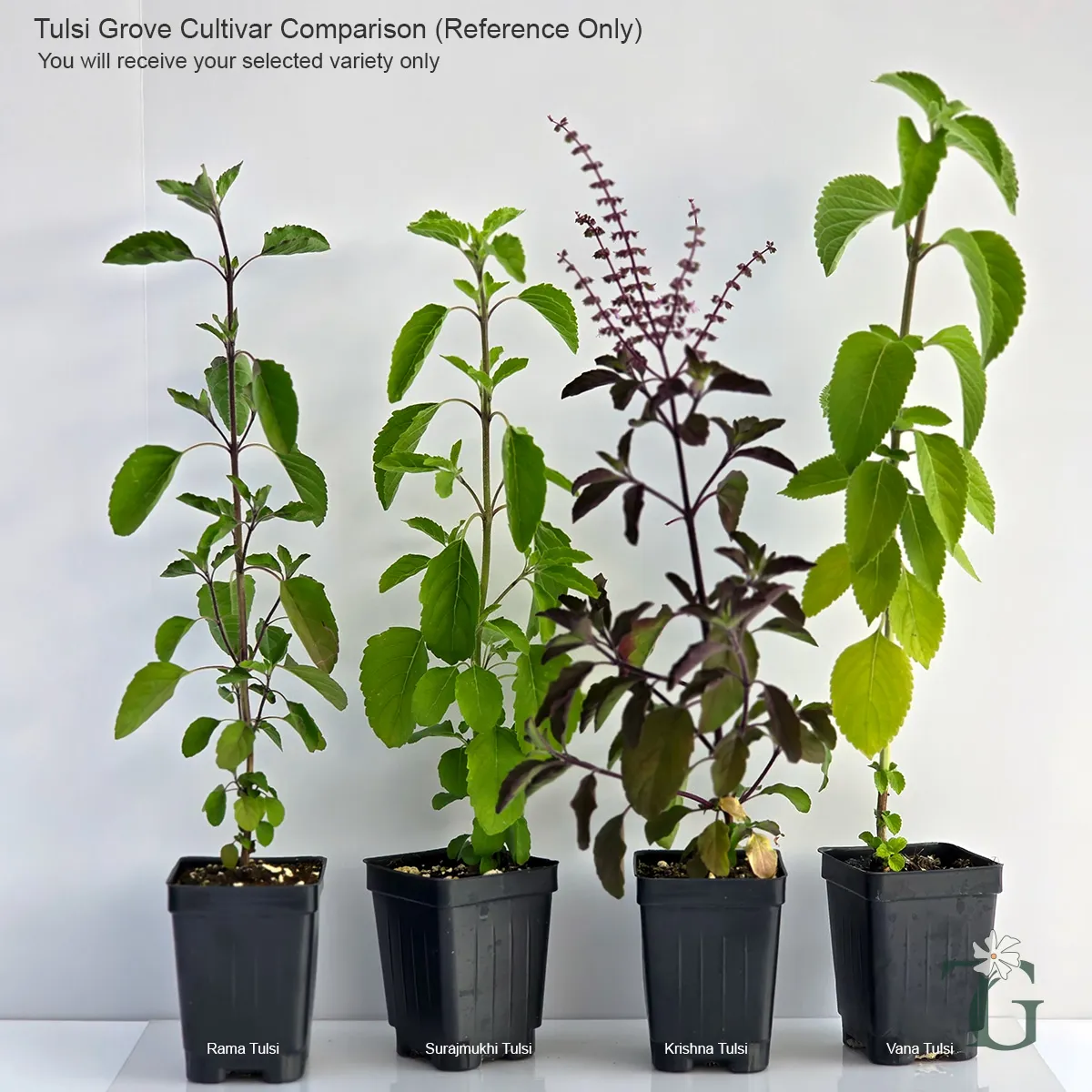
Upright, bushy with deep purple foliage
Mature size
2 ft tall • 1 ft 6" wide
Climate fit
Perennial in Zones 10–11

Krishna Tulsi (Purple Holy Basil)

Ocimum tenuiflorum (syn. Ocimum sanctum)
$29.00
SKU: TG-TULSI-KRISH-2P5

Krishna tulsi stands apart visually and aromatically. Its purple foliage deepens with light, and its scent carries more intensity than most green varieties. It’s often chosen by people who already enjoy tulsi and want a plant with stronger character.

Available pot sizes
Shop this plant
Ships carefully packed • Care guide included
Care basics
Light
Full sun
Water
Let top inch dry
Soil
Well-draining
Fertilizer
Moderate feeder
Pruning
Pinch for bushiness
Cold
Freeze sensitive

About this plant

Botanical snapshot
Genus Ocimum
Species tenuiflorum
Cultivar Krishna
Family Lamiaceae

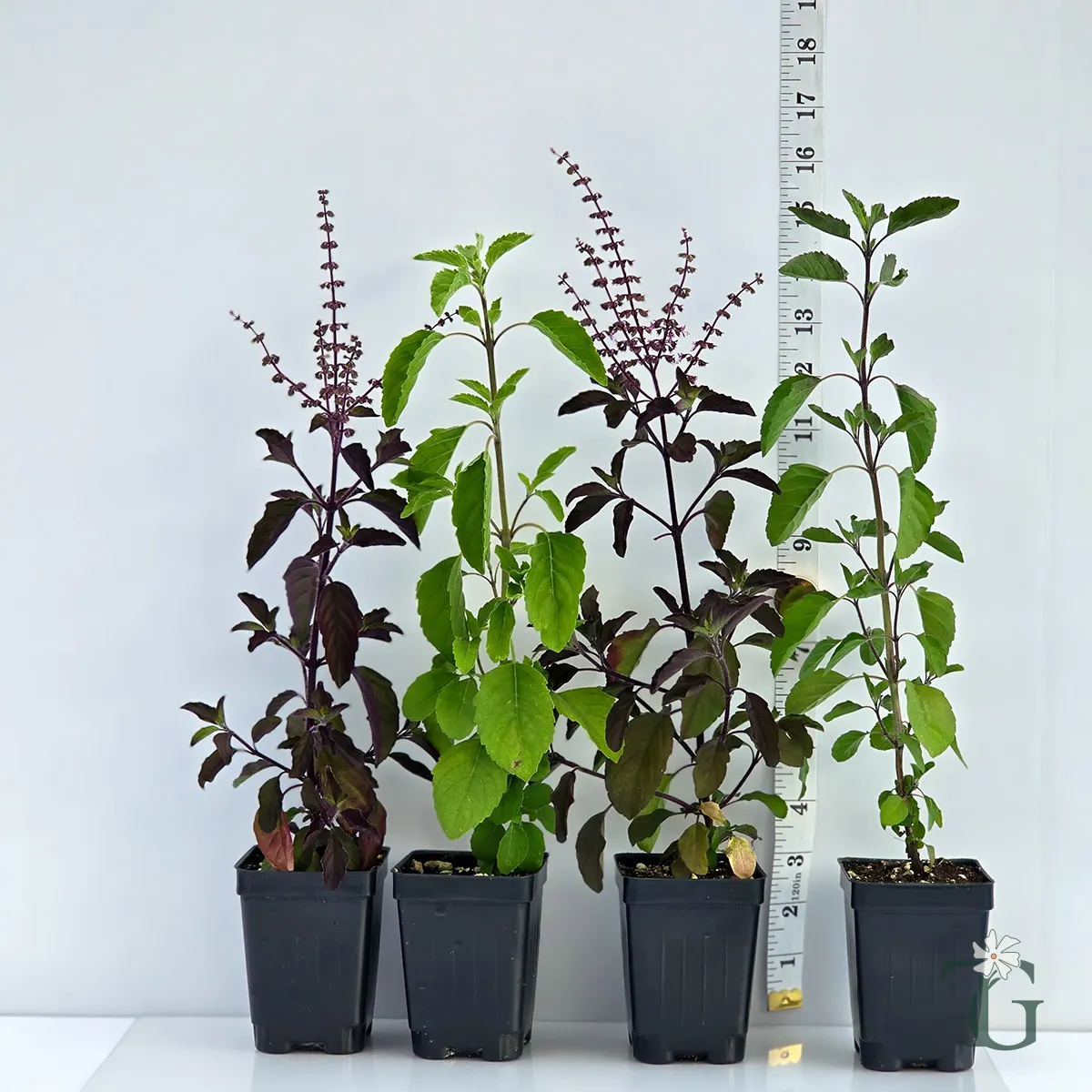
Krishna tulsi is a purple-leaf form of holy basil known for its bolder fragrance and color variation. In strong light, leaves develop deeper purple tones; in lower light, they may shift toward green. Both expressions are normal and part of the plant’s range.

Why people keep it

  • Color presence: the foliage adds contrast among green herbs.
  • Aroma: spicier and more assertive when leaves are warmed by sun.
  • Interaction response: pinching and harvesting encourage fuller growth quickly.

What to expect

Krishna tulsi grows upright and becomes bushy when pruned regularly. Like most tulsi, it slows when nights cool and rebounds with warmth. Leaf color will shift with light exposure rather than remaining fixed.

How we grow and ship it

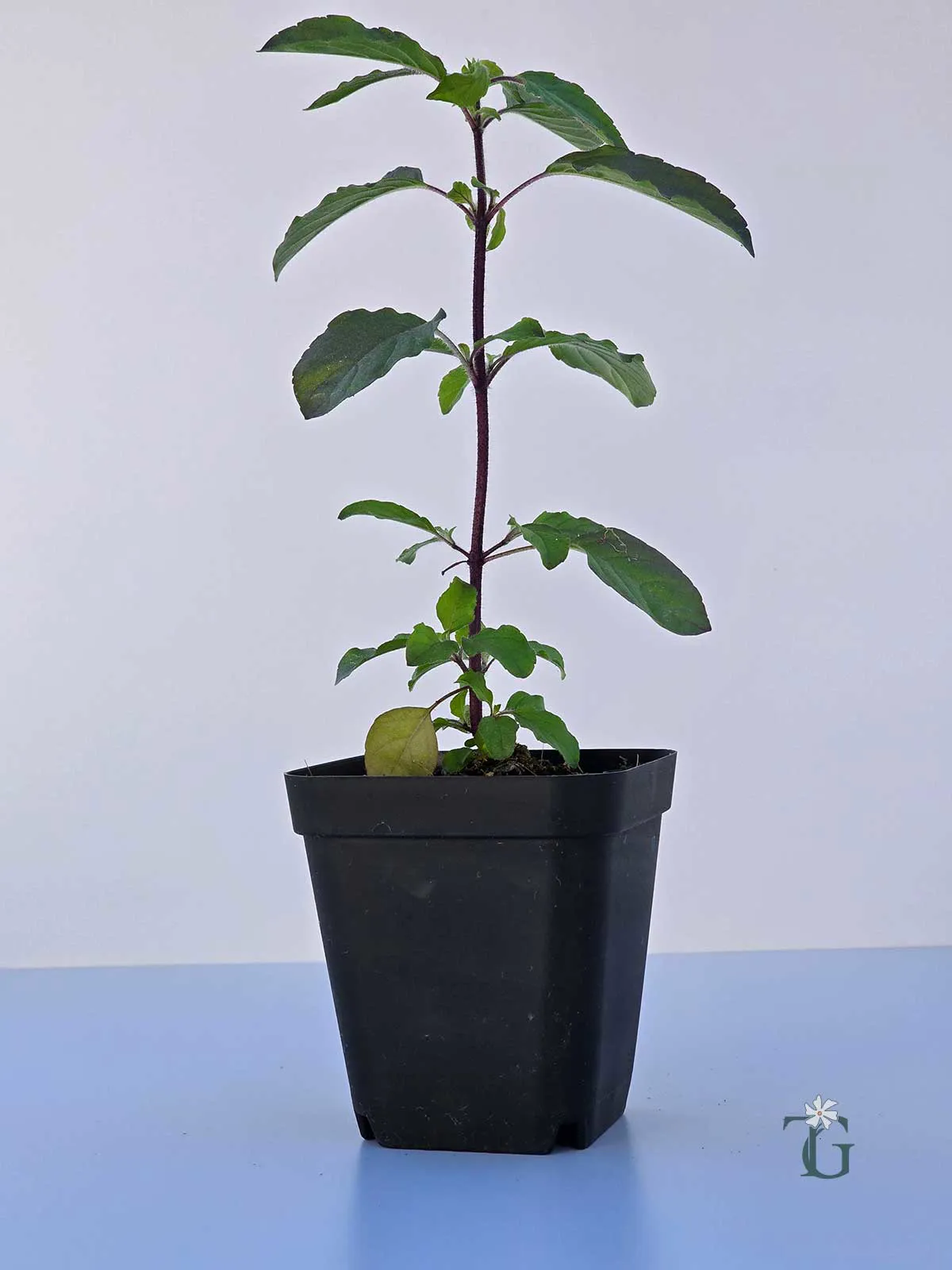
We ship actively growing plants rather than oversized specimens that struggle after transit. Some leaf droop is normal post-shipping. Bright light and steady watering rhythms help the plant reestablish more effectively than overcorrection.

Practical Tips

  • Begin pinching early if you want a fuller plant.
  • Expect color variation based on light, this is natural and not a deficiency.
  • Protect from cool nights, Krishna tulsi reacts quickly to temperature drops.
  • Best suited for containers where warmth and light can be managed consistently.
  • Krishna tulsi is a good choice if you already enjoy Rama but want stronger fragrance and visual contrast. It’s equally suitable for container growing, provided warmth and light remain consistent.

Full care guide

The details behind the basics.
Light
Full sun
Grow Krishna Tulsi in full sun for best vigor and flowering. In extreme heat, provide consistent watering and consider light afternoon shade.
Water
Let top inch dry
Water Krishna Tulsi thoroughly, then let the top inch of soil dry before watering again. Don’t keep the pot constantly wet.
Soil
Well-draining
Use a well-draining mix for Krishna Tulsi. The goal is moisture retention without staying soggy—drainage is non-negotiable.
Fertilizer
Moderate feeder
Feed Krishna Tulsi regularly during the growing season with a balanced fertilizer. Reduce or pause feeding when growth slows.
Pruning
Pinch for bushiness
Pinch Krishna Tulsi regularly to encourage branching and a fuller shape. Small, frequent pinches beat one dramatic haircut.
Cold
Freeze sensitive
Krishna Tulsi will suffer below ~32°F. In cold climates, treat it as an annual or overwinter it indoors until frost danger passes.
Pests
Moderate risk
Krishna Tulsi can attract common pests under stress. Watch for early signs, maintain airflow, and avoid overwatering and low light.
Toxicity
Pet safe (generally)
Based on commonly available references, Krishna Tulsi is generally considered pet-safe. As always, discourage chewing and monitor sensitive pets.