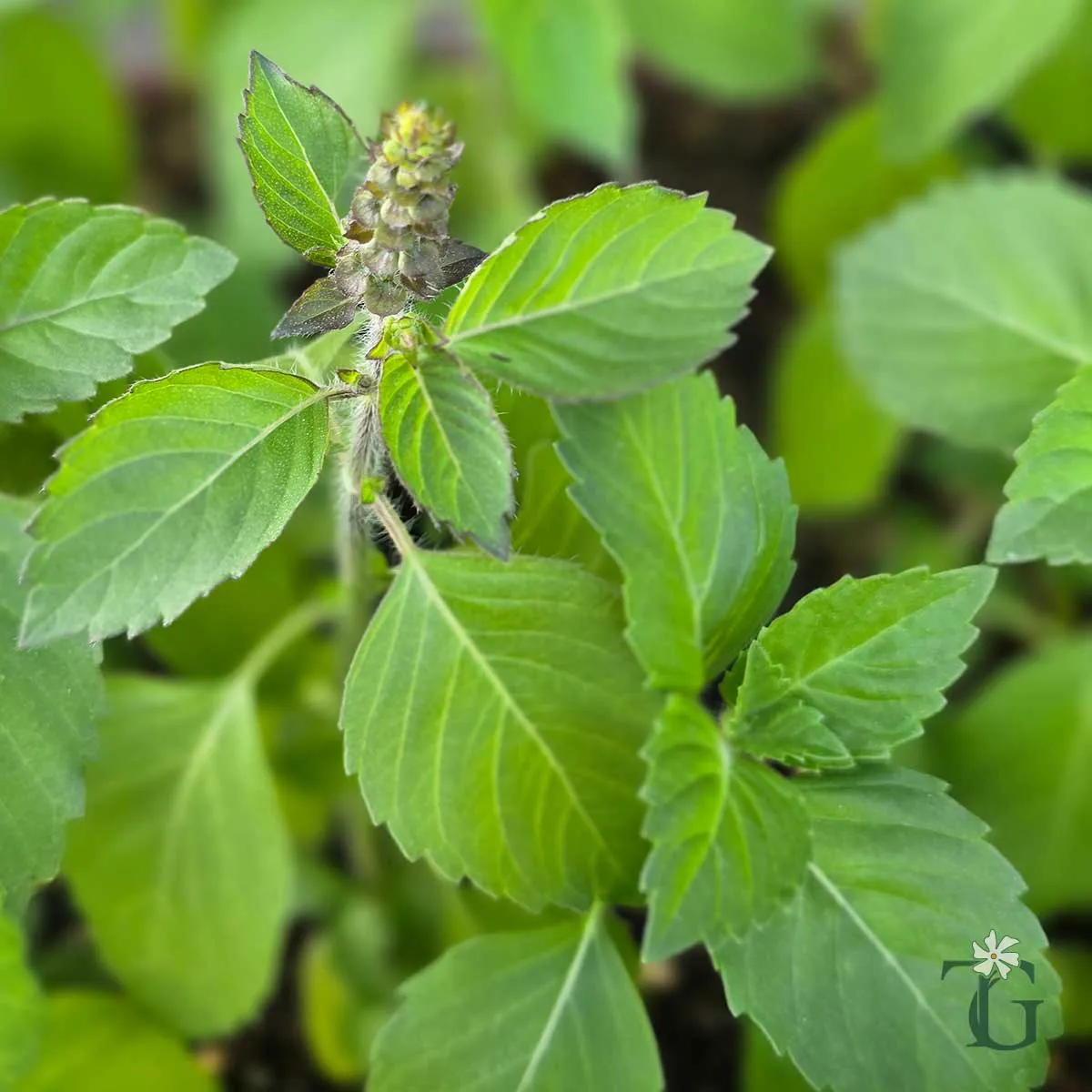
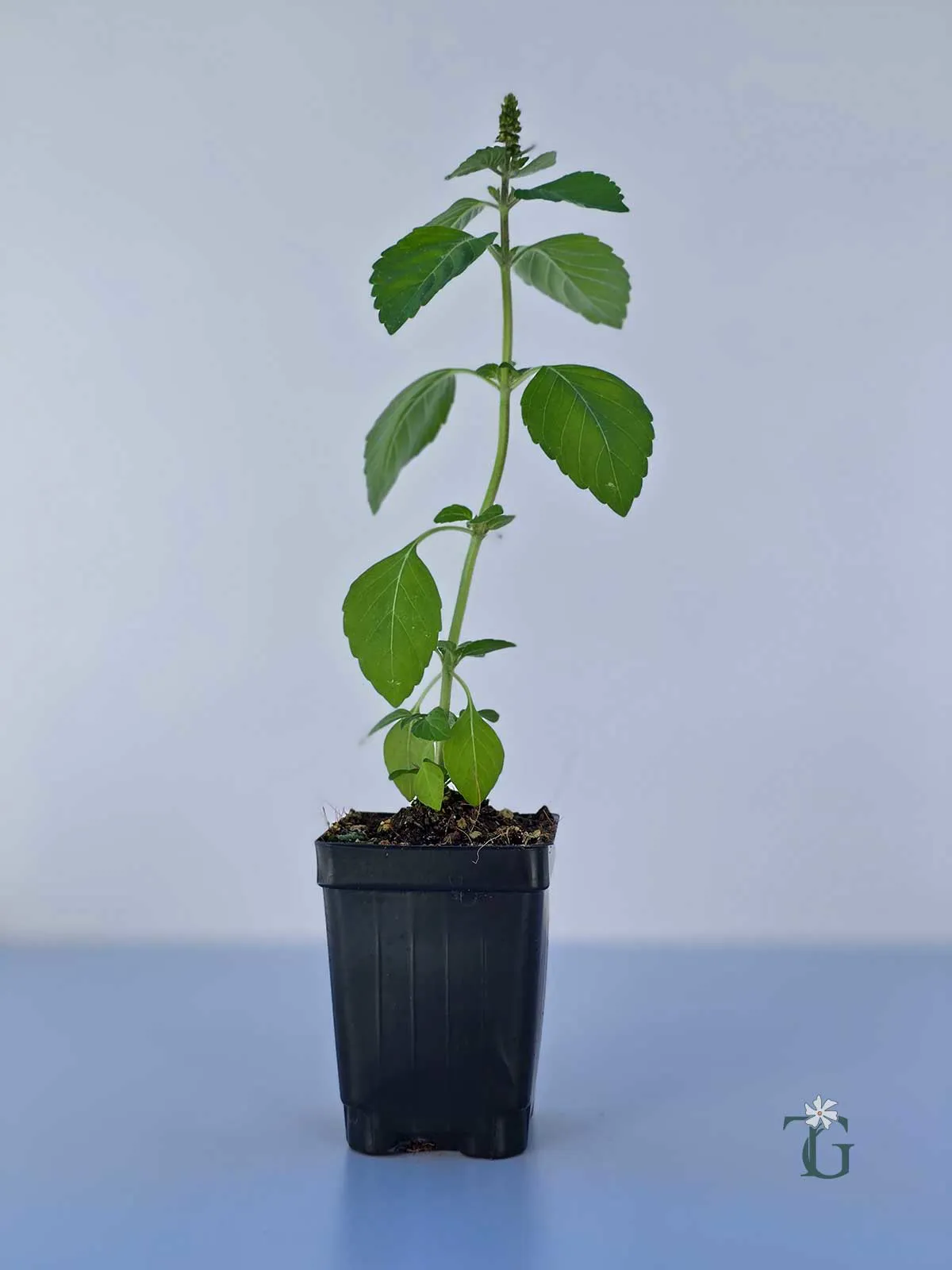
Kapoor tulsi is commonly associated with Ocimum kilimandscharicum and is recognized for its high aromatic oil content. Its scent is sharper and more camphor-forward than Rama or Krishna, making it a distinct category rather than a variation of green tulsi.
Why people keep it
- Fragrance first: aroma is noticeable even without harvesting leaves.
- Environmental presence: brushing past the plant releases scent into the air.
- Conversation starter: visitors often ask about it because the aroma is so distinct.
What to expect
Kapoor tulsi grows upright and becomes fuller with regular pinching. The fragrance intensifies during warm afternoons and after light handling. Like most tulsi, it reacts quickly to cold nights and benefits from early protection when temperatures drop.
How we grow and ship it
We ship healthy, actively growing plants rooted in clean media. After transit, allow a few calm days before harvesting heavily. Bright light and stable watering help the plant adjust more smoothly than sudden changes.
Practical Tips
- Place near walkways or seating areas where light contact releases fragrance.
- Protect early from cold, Kapoor tulsi does not tolerate cool nights well.
- Regular pinching encourages fuller growth and stronger scent production.
- Best for growers who value aroma over leaf yield.