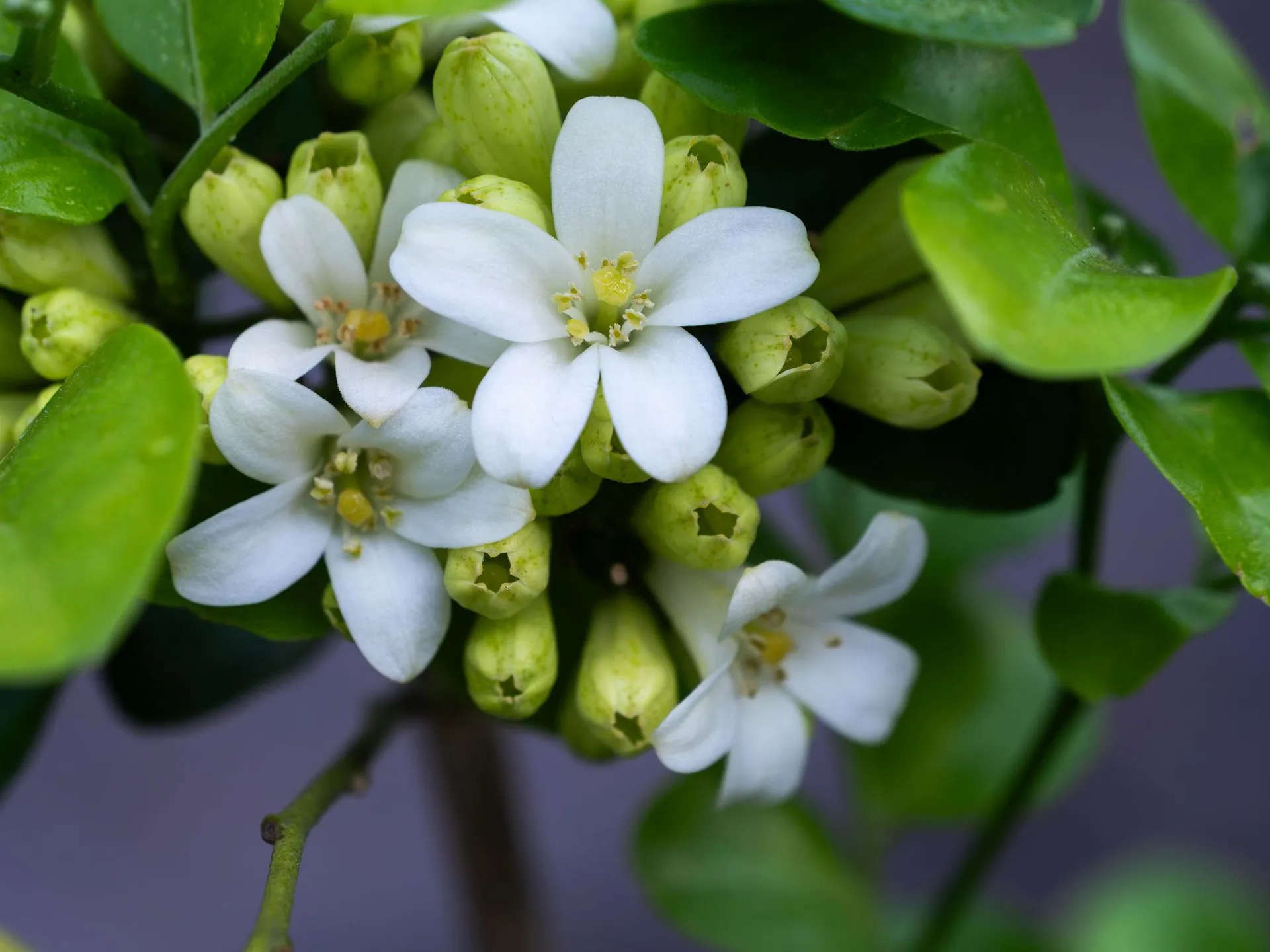
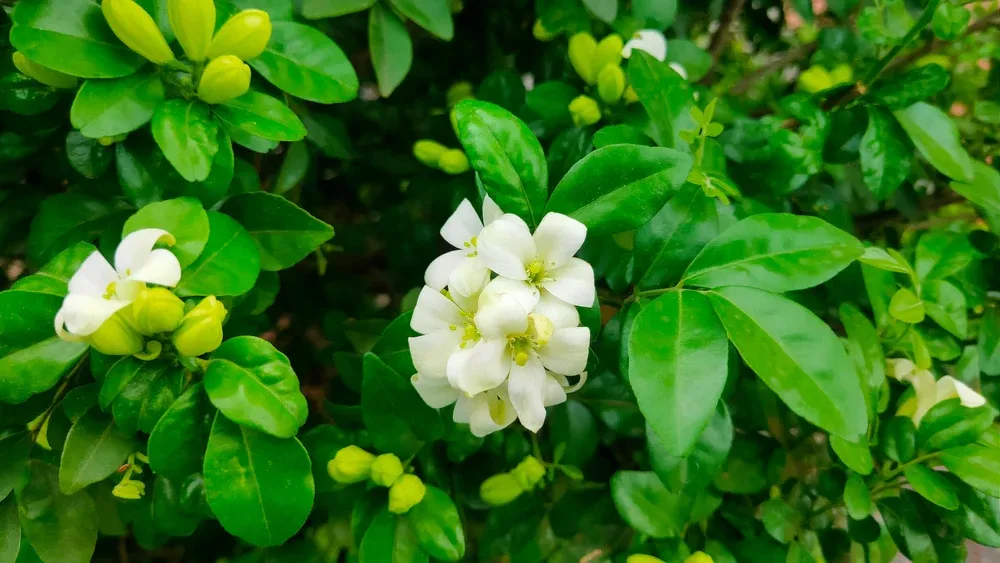
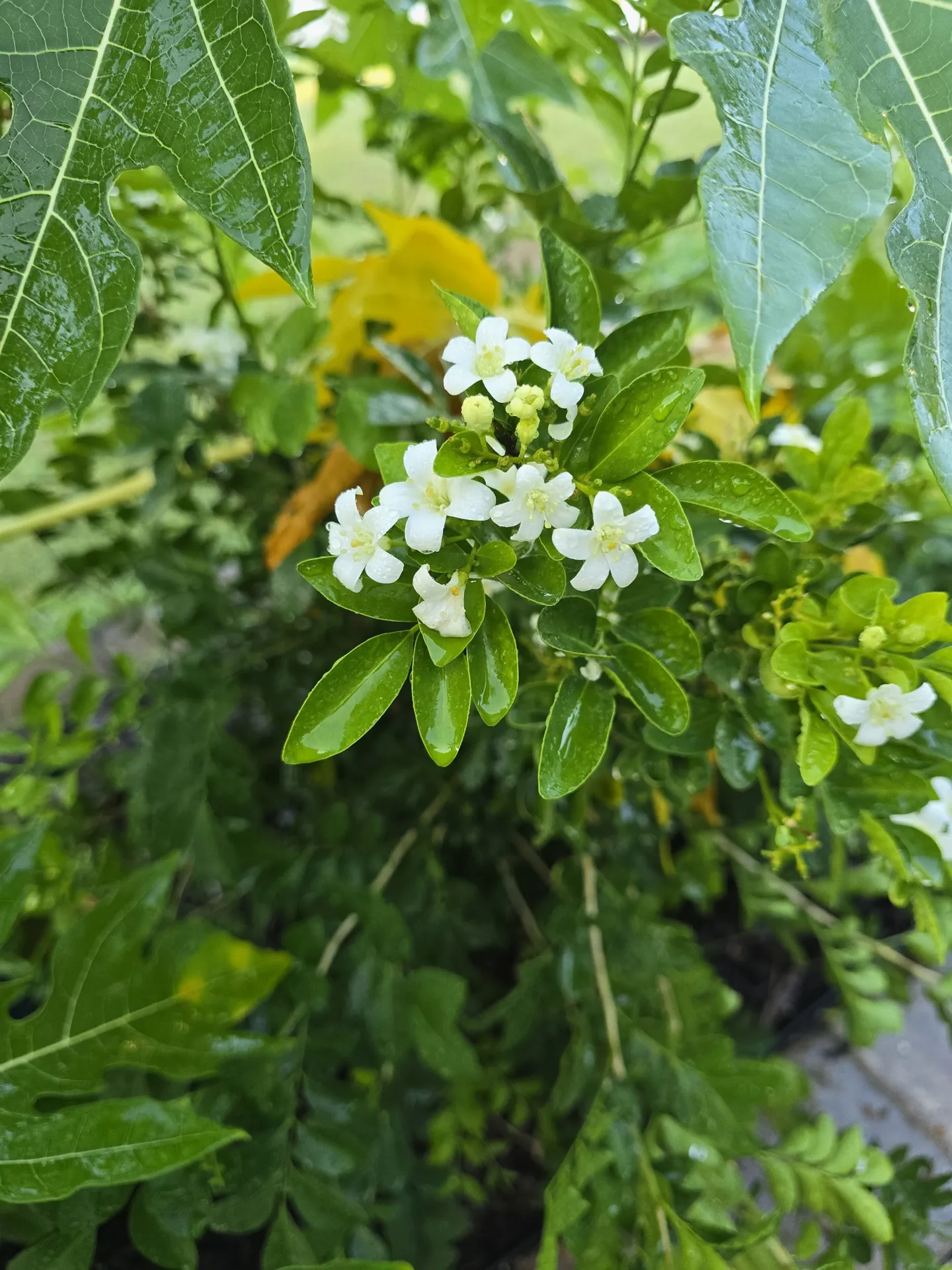
Kamini, commonly grown as an ornamental shrub, is valued for its dense foliage and clusters of small white flowers. The blooms appear intermittently through warm seasons and carry a light citrus-like fragrance. The plant responds well to shaping, making it a familiar presence in courtyards and walkways.
Why people keep it
- Evergreen structure: provides year-round greenery in shared spaces.
- Soft fragrance: noticeable when nearby, never overwhelming.
- Shapable growth: responds well to trimming and boundary planting.
- Familiar presence: often part of entrances and garden edges rather than focal points.
Cultural presence
The name Kamini has long been associated with grace and charm, which may explain why the plant often appears in spaces meant to feel welcoming. While not typically used in ceremony, it is remembered as part of homes where plants were tended regularly and aesthetics mattered quietly rather than loudly.
What to expect
Kamini grows steadily and benefits from regular shaping. Flowering may happen several times a year under warm conditions. The plant develops a fuller form with pruning and adapts well to containers or ground planting.
How we grow and ship it
We grow Kamini for branching strength and leaf health rather than forcing blooms. Plants are shipped while actively growing. After transit, allow time for adjustment before shaping or relocating.
Disambiguation & Cultural Notes
- Not a true jasmine: despite the common name, Kamini belongs to a different plant group.
- Fragrance character: softer and lighter compared to mogra or night-blooming varieties.
- Landscape use: often chosen for borders and hedges rather than decorative display.
- Shared familiarity: recognized more through presence than through naming.
Practical Tips
- Prefers bright light for fuller growth.
- Regular trimming encourages denser foliage.
- Avoid overwatering, roots prefer good drainage.
- Suitable for containers, hedges, or standalone placement.