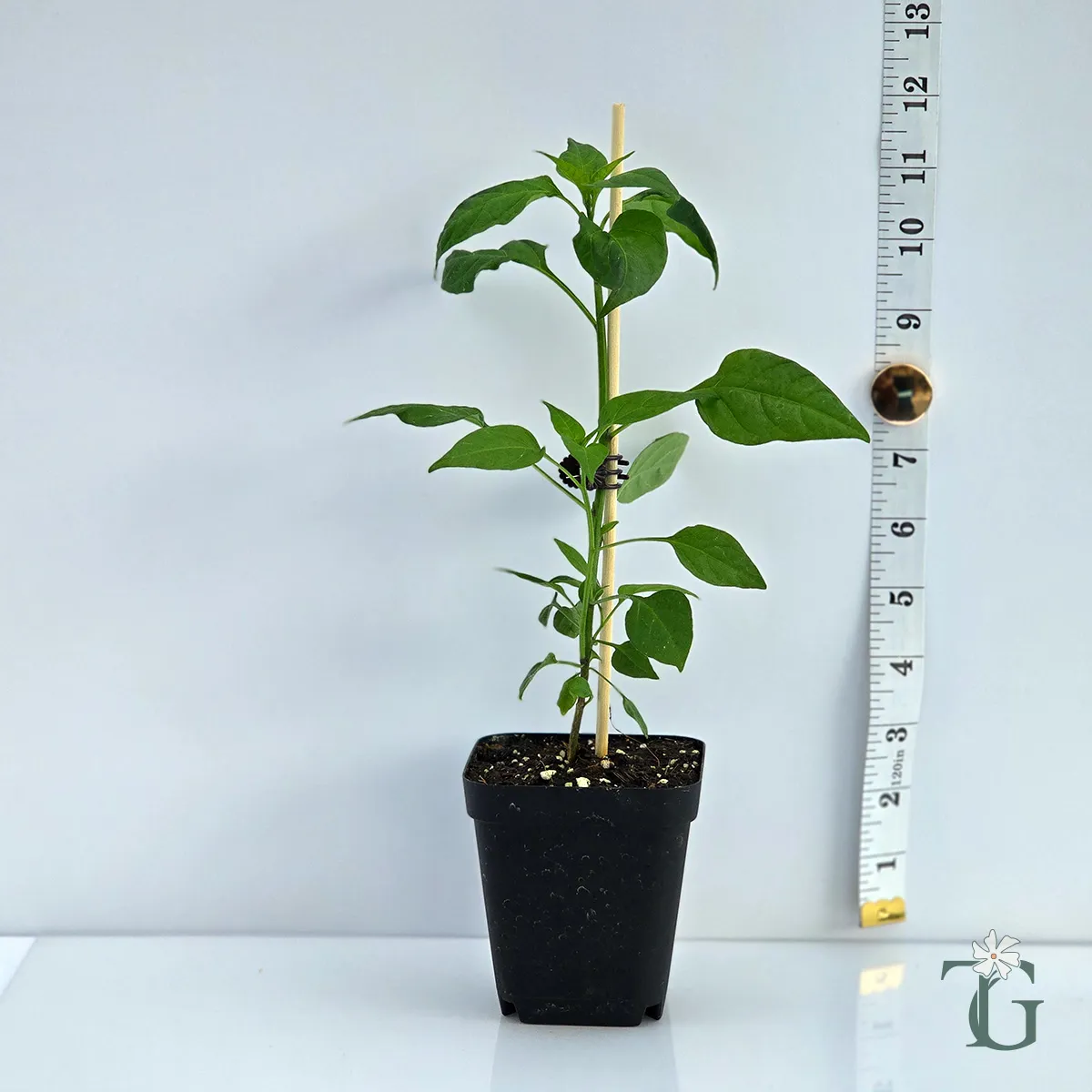
Plant profile
Details
Growth habit
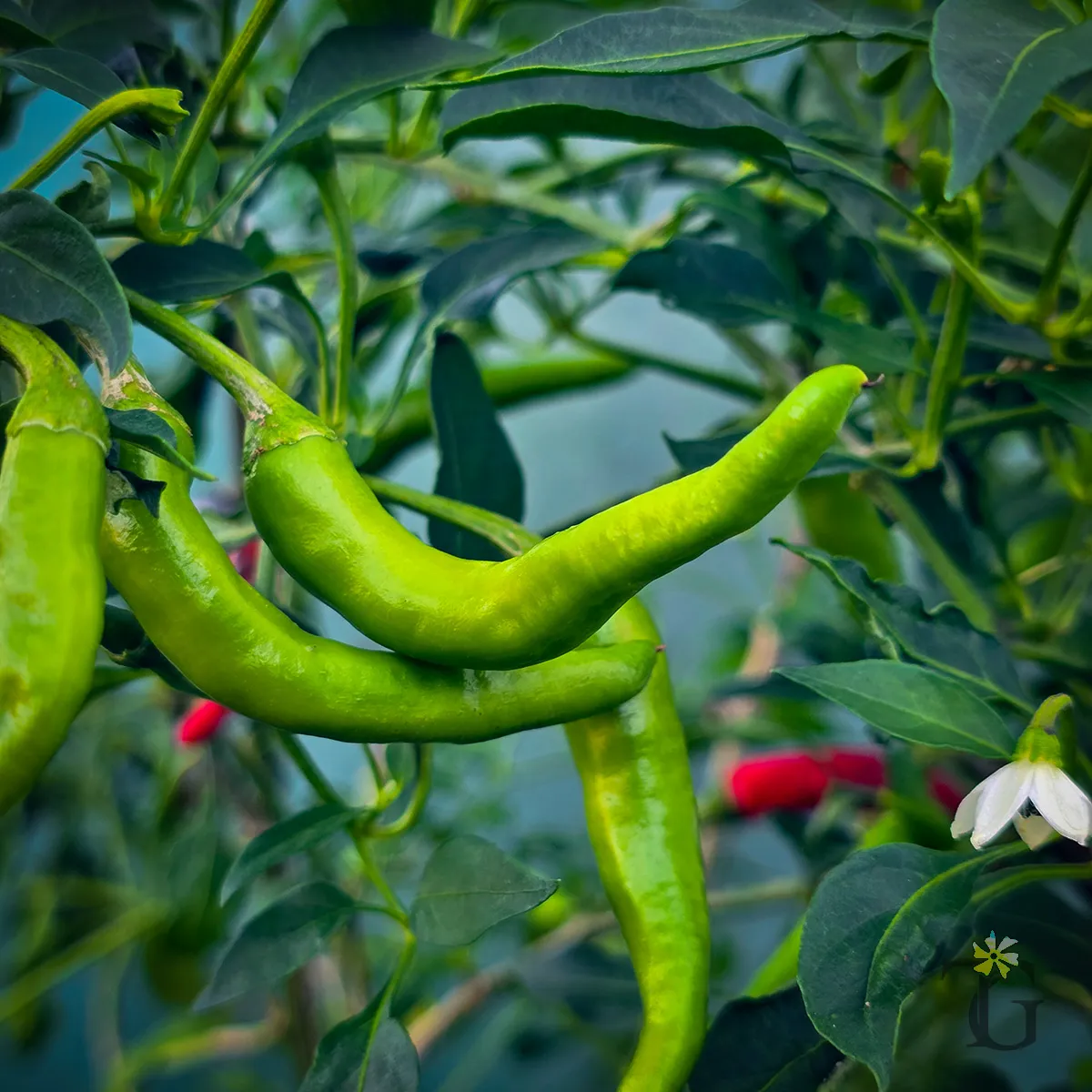
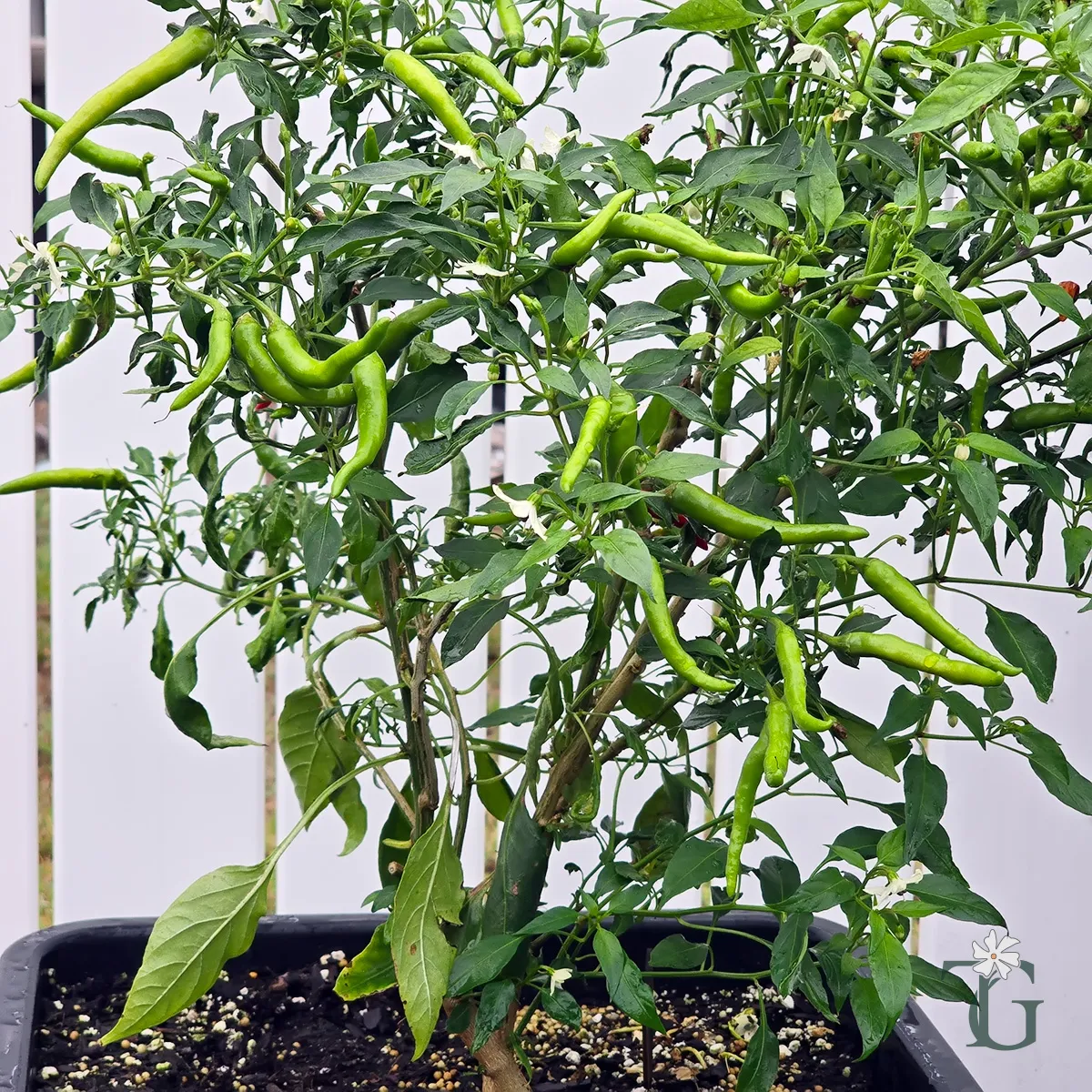
Upright, branching pepper plant with slender green fruits
Mature size
2 ft tall • 1 ft 6" wide
Climate fit
Perennial in Zones 9–11

Jwala Pepper (Indian Green Mirch)

Capsicum annuum
$29.99
SKU: TG-PEP-JWL-3P

Jwala pepper is the standard green mirch found in everyday Indian cooking. It is valued for its clean heat, quick bite, and ease of use across a wide range of dishes. Unlike specialty peppers, it is not used for intensity alone but for balance. It fits naturally into daily cooking and is often the first pepper people reach for without thinking.

Available pot sizes
Shop this plant
Ships carefully packed • Care guide included
Care basics
Light
Full sun
Water
Let top inch dry
Soil
Well-draining
Fertilizer
Moderate feeder
Pruning
Pinch for bushiness
Cold
Freeze sensitive
Tags
chili container plant cooking pepper edible plant green mirch

About this plant

Botanical snapshot
Genus Capsicum
Species annum
Cultivar Pusa Jwala (IARI)
Family Solanaceae

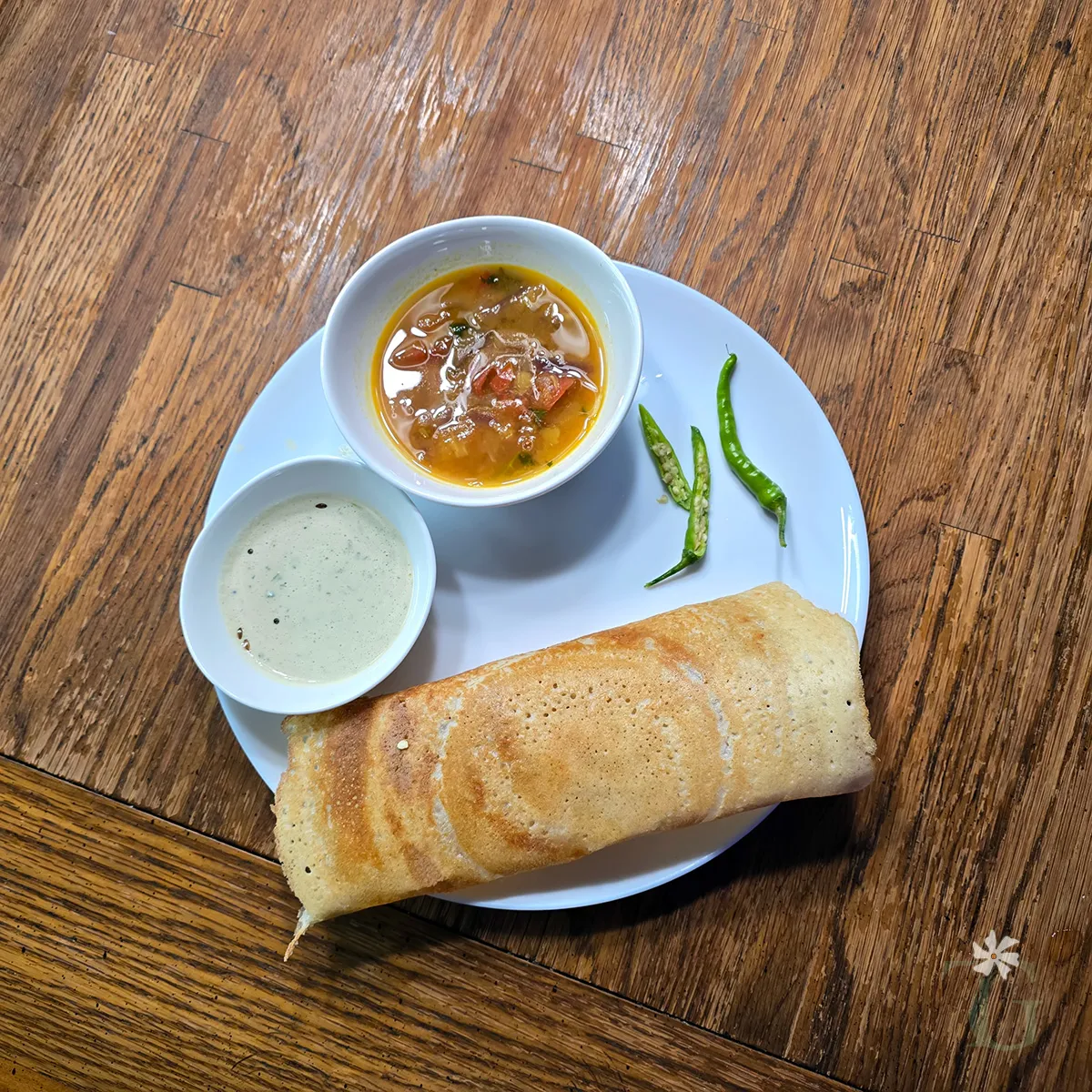
Jwala pepper, commonly known as Indian green mirch, is a slender, medium-hot cooking pepper used across North Indian households for everyday food. It is valued for its clean, direct heat and its role in daily cooking, where it appears in tadka, sabzi, poha, chutneys, and snacks without needing to be measured or called out.

The plant produces long, thin green peppers that can be used fresh or allowed to mature to red. Most people harvest them green, when the flavor is sharper and more immediate. This is not a novelty pepper. It is part of the baseline of Indian cooking.

Seed stock is derived from Indian agricultural lines such as Pusa selections, chosen for consistency, yield, and reliable kitchen use.

Why people keep it

  • Heat balance: strong enough to be noticed, usable every day
  • Kitchen fit: works across a wide range of dishes without adjustment
  • Harvest rhythm: frequent picking drives continuous production

What to expect

Jwala pepper grows upright and begins producing early under warm conditions. Plants remain compact enough for containers and respond well to regular harvesting, which encourages branching and continued fruiting.

Like most peppers, growth slows when temperatures drop and resumes with warmth. Fruit size and shape remain consistent when grown under stable conditions.

Heat level

Estimated Scoville: 30,000 to 50,000 SHU

For reference:

  • Jalapeño: ~2,500 to 8,000 SHU
  • Serrano: ~10,000 to 25,000 SHU

Jwala sits above both. Noticeably hot, but still used daily.

How we grow and ship it

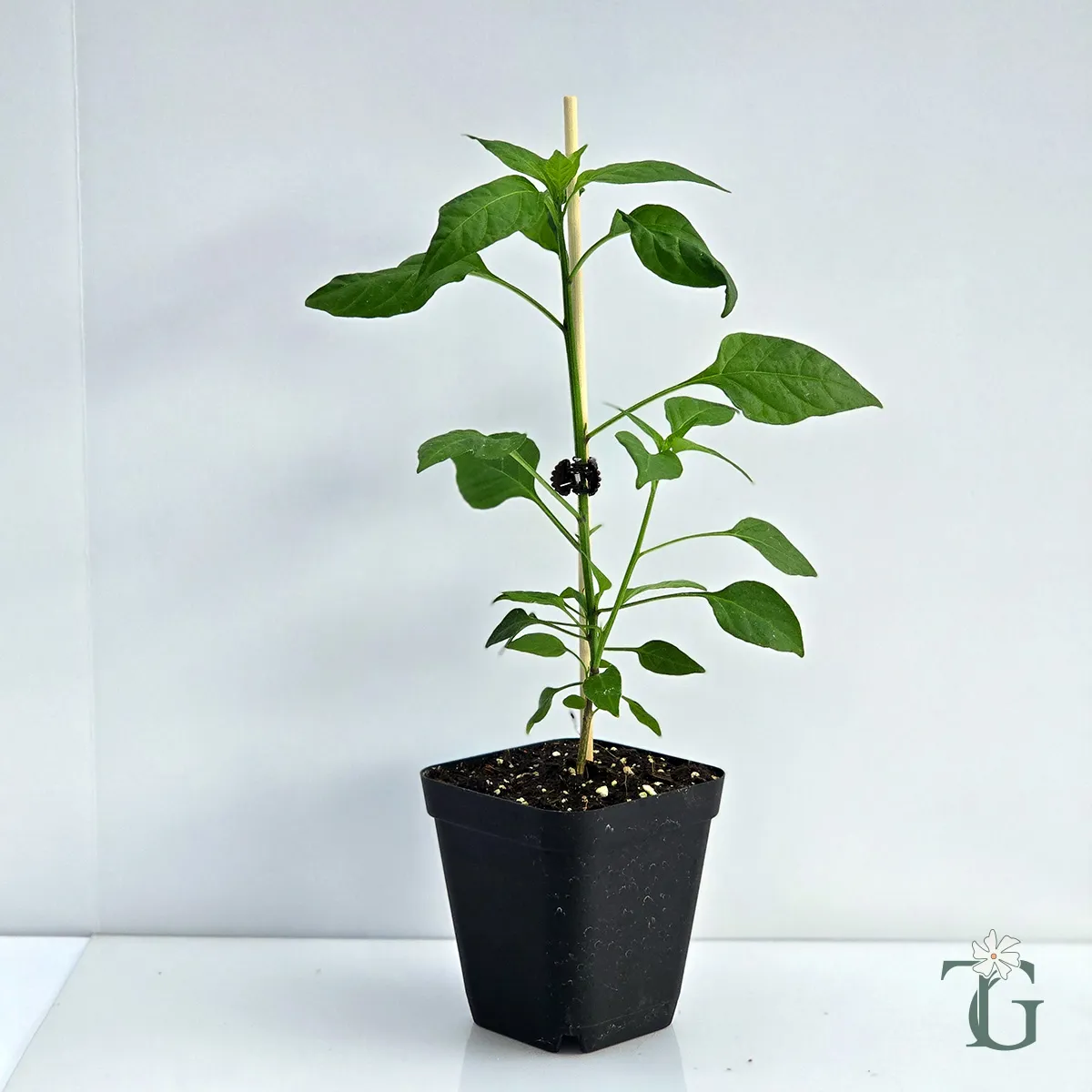
We ship actively growing plants that are still in their establishment phase rather than oversized specimens that struggle after transit. This allows the plant to adapt more reliably after transplant.

Some leaf softening during transit is normal. With strong light and steady watering, the plant settles quickly and resumes growth.

Practical Tips

  • Harvest regularly to maintain production
  • Use green stage for sharper flavor and faster turnover
  • Provide full sun for best yield and structure
  • Avoid overwatering, peppers prefer controlled moisture

Jwala pepper is a natural starting point if you want a reliable cooking chili rather than a specialty heat variety. It fits easily into container growing and becomes part of daily use rather than an occasional ingredient.

Full care guide

The details behind the basics.
Light
Full sun
Grow Jwala Pepper in full sun for best vigor and flowering. In extreme heat, provide consistent watering and consider light afternoon shade.
Water
Let top inch dry
Water Jwala Pepper thoroughly, then let the top inch of soil dry before watering again. Don’t keep the pot constantly wet.
Soil
Well-draining
Use a well-draining mix for Jwala Pepper. The goal is moisture retention without staying soggy—drainage is non-negotiable.
Fertilizer
Moderate feeder
Feed Jwala Pepper regularly during the growing season with a balanced fertilizer. Reduce or pause feeding when growth slows.
Pruning
Pinch for bushiness
Pinch Jwala Pepper regularly to encourage branching and a fuller shape. Small, frequent pinches beat one dramatic haircut.
Cold
Freeze sensitive
Jwala Pepper will suffer below ~32°F. In cold climates, treat it as an annual or overwinter it indoors until frost danger passes.
Pests
Moderate risk
Jwala Pepper can attract common pests under stress. Watch for early signs, maintain airflow, and avoid overwatering and low light.
Toxicity
Pet safe (generally)
Based on commonly available references, Jwala Pepper is generally considered pet-safe. As always, discourage chewing and monitor sensitive pets.