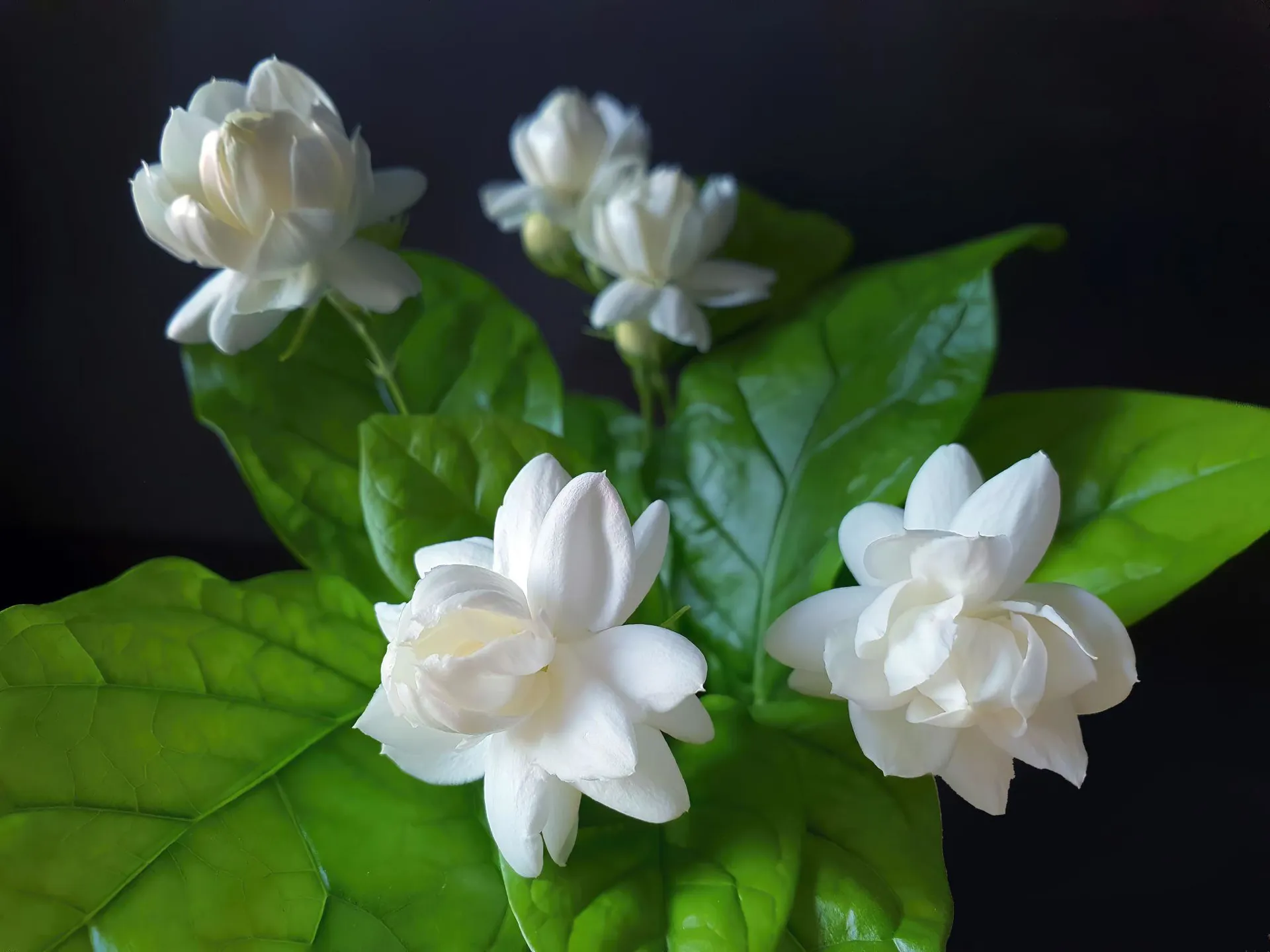
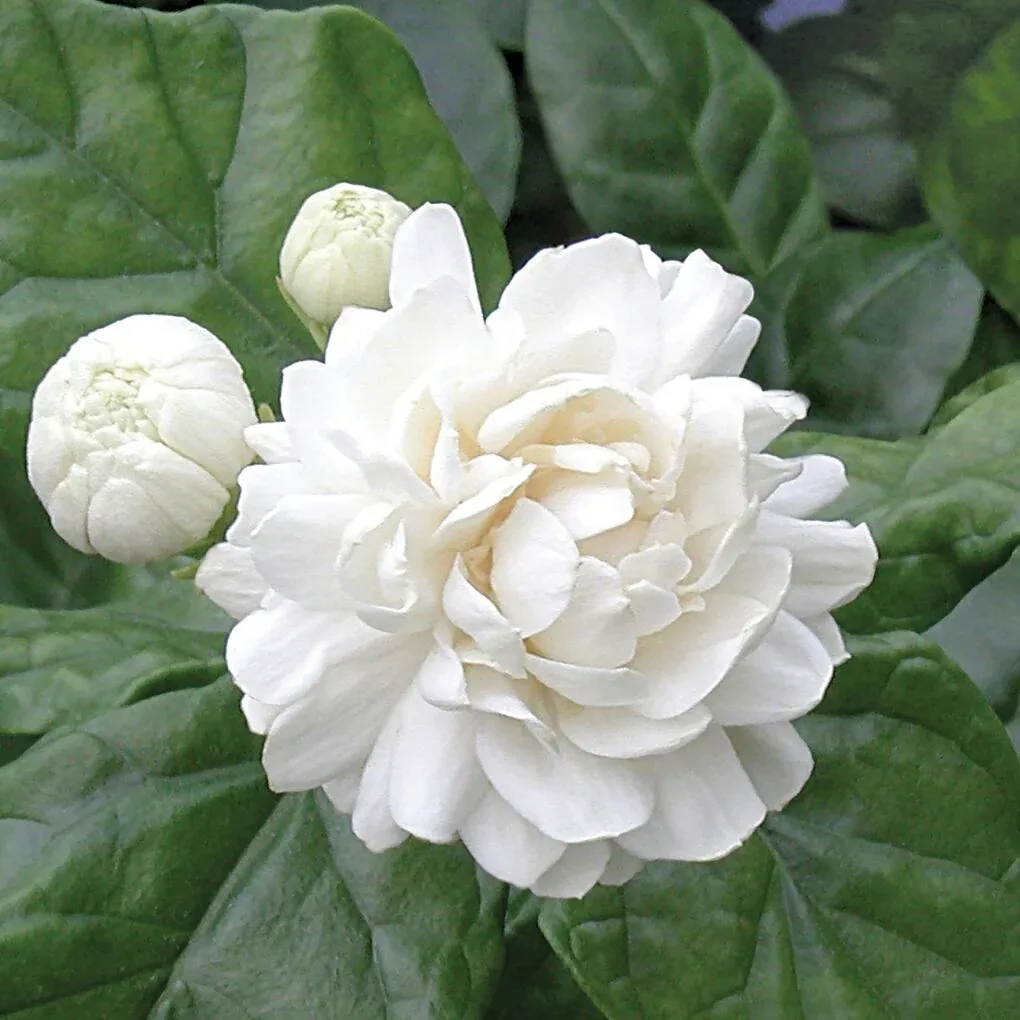
Grand Duke of Tuscany is a double flowered form of Jasminum sambac. Unlike single petal jasmines, its blooms are layered and dense, opening gradually rather than all at once. The plant grows as a compact shrub rather than a climber.
Why people grow it
- Dense double blooms: flowers resemble small white roses.
- Heavy fragrance: richer and deeper than single petal varieties.
- Ceremonial feel: blooms feel intentional, not casual.
- Collector appeal: chosen by people who already understand jasmine.
Cultural presence
In Indian homes, this jasmine is often associated with special occasions rather than daily picking. Its blooms are prized for their form and scent, used selectively rather than abundantly. It carries a sense of restraint, not because it gives less, but because it asks more from the grower.
Among jasmine lovers, Grand Duke of Tuscany is known as a plant that separates curiosity from commitment.
What to expect
This jasmine grows slowly compared to other sambac types. Buds may take time to open fully, especially in cooler or inconsistent conditions. Flowering improves with maturity, warmth, and stability.
This is not a plant that likes to be moved often.
How we approach it at Tulsi Grove
We list Grand Duke of Tuscany as an intent plant because it aligns with our values. When we carry it, it will be grown patiently and shipped only once established enough to handle transition. This is not a plant we rush to market.
Disambiguation & Cultural Notes
- Not a vine: grows as a compact shrub.
- Slower flowering: compared to single petal sambac.
- Often confused with Arabian jasmine: bloom structure is the key difference.
- Fragrance timing: scent intensifies as flowers age rather than at first opening.
Practical Tips
- Bright light encourages flowering
- Warm, stable temperatures matter
- Water consistently, do not overcorrect
- Avoid frequent relocation
- Patience improves performance