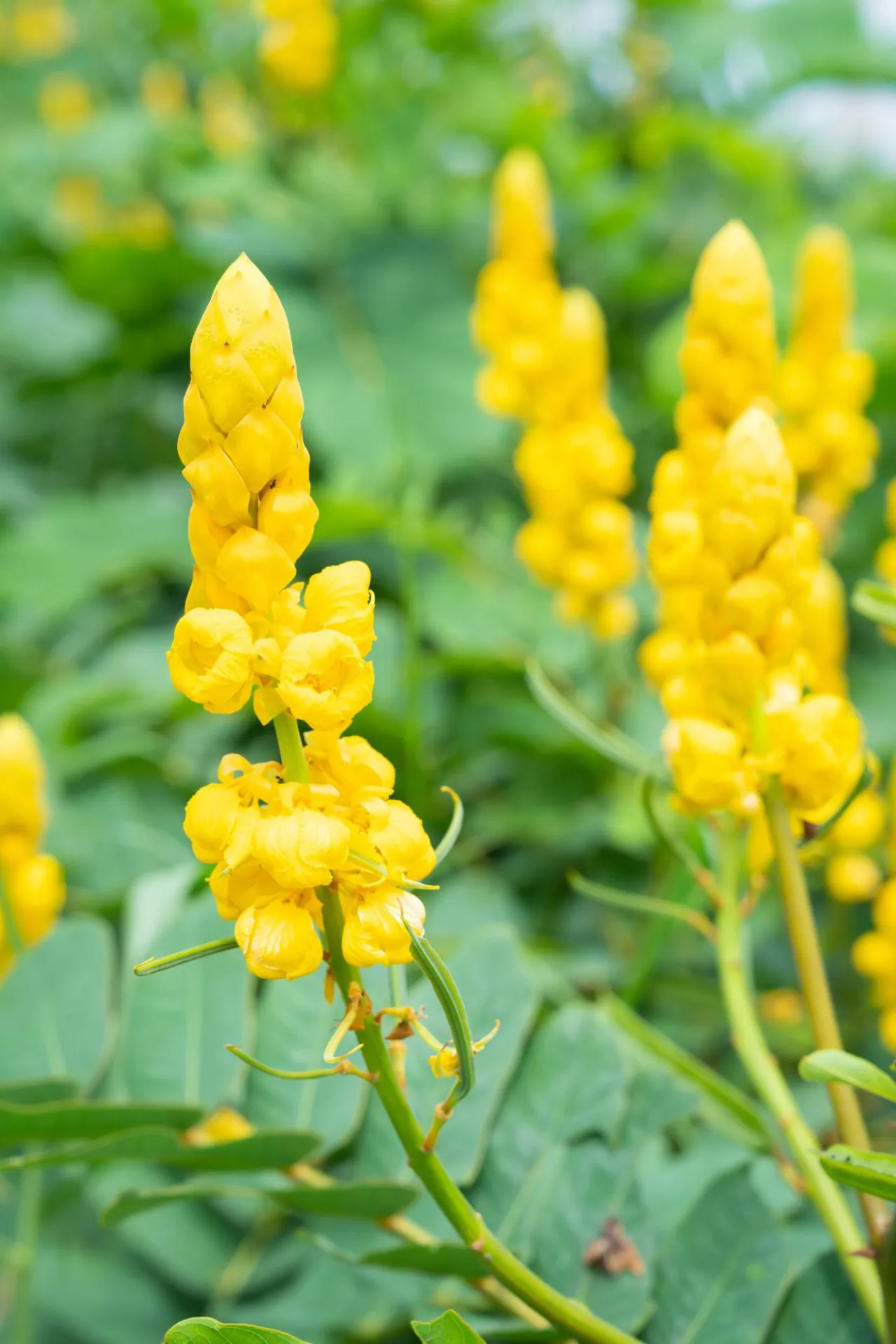
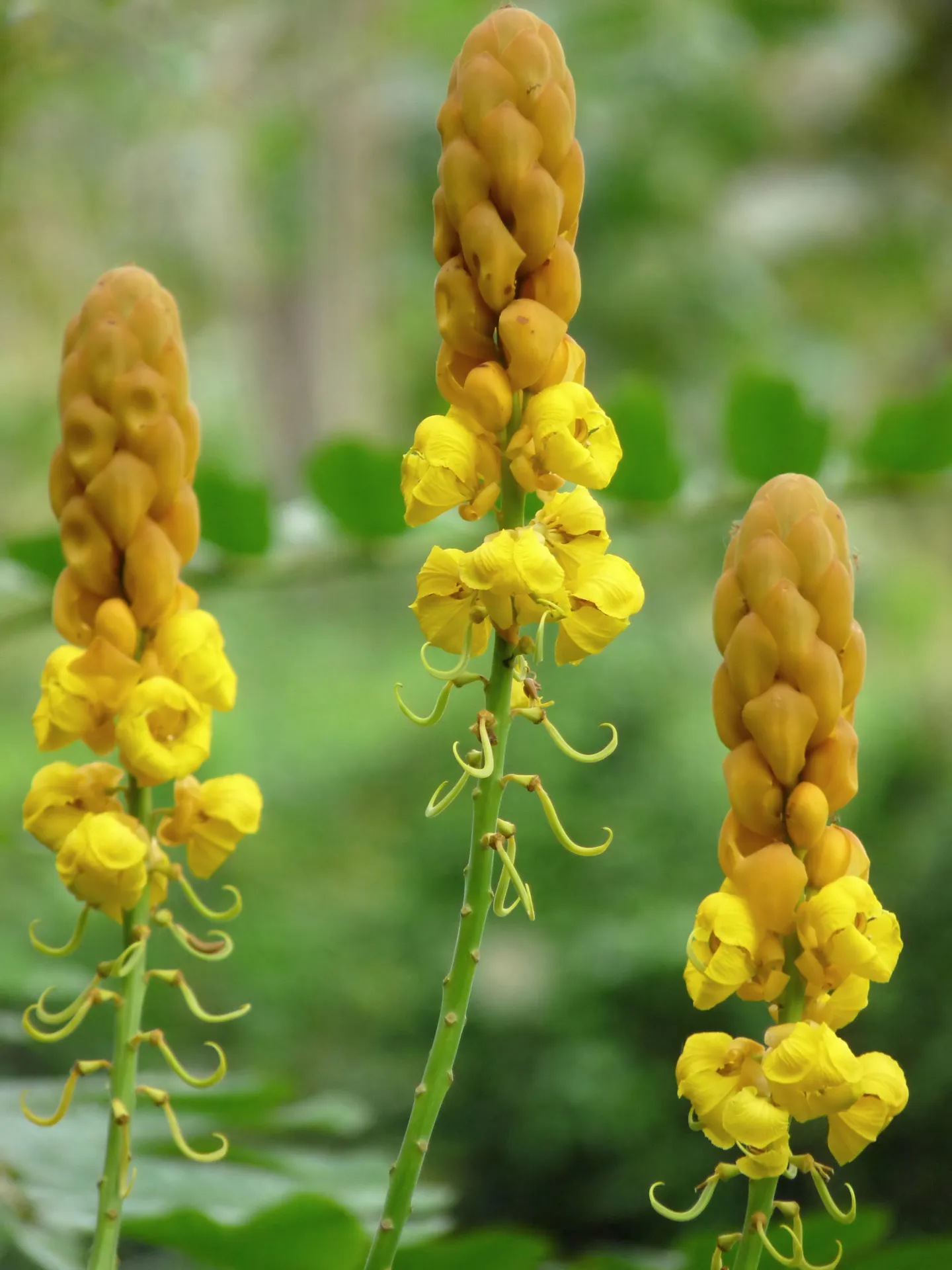
Candlestick Senna is a warm climate shrub known for upright yellow flower spikes that resemble candles when in bloom. It grows quickly in heat and sun, producing broad foliage and repeated flowering during the warmer months.
Why people grow it
- Bold structure: vertical flower spikes create strong visual rhythm.
- Fast growth: fills space quickly in warm conditions.
- Seasonal impact: blooms heavily during peak summer.
- Low fuss: tolerant of heat and sun once established.
- Living activity: when in bloom, it draws honeybees, butterflies, and other pollinators in visible numbers.
Cultural presence
Senna plants appear across tropical and subtropical regions, often grown for practicality and visibility rather than ornament alone. In many places, Candlestick Senna is remembered as a familiar roadside or courtyard plant, valued for its reliability and clear seasonal signals.
In many warm regions, Candlestick Senna is remembered not just for how it looks, but for how alive it feels. When flowering begins, the plant becomes active in a way that surprises people unfamiliar with it, buzzing, moving, and visibly occupied from morning to evening. It is one of those plants that reminds you a garden is not just visual, it is ecological.
It is not ceremonial, but it is recognizable.
What to expect
This plant thrives in full sun and warmth. Growth can be rapid, especially during rainy or humid periods. Without occasional pruning, it may become tall and open. Flowering is strongest when the plant is well established and exposed to consistent light.
During peak bloom, expect noticeable pollinator traffic. The plant does not just flower, it hosts.
How we grow and ship it
We grow Candlestick Senna in open conditions so it adapts well to home gardens. Plants are shipped actively growing. After arrival, allow time for roots to settle before shaping or heavy pruning.
Disambiguation & Cultural Notes
- Often confused with other cassia species: flower structure and upright habit help distinguish it.
- Broad leaves: foliage is part of its visual presence, not just the flowers.
- Warm climate plant: growth slows noticeably in cooler weather.
- Space matters: performs best where it is not crowded.
- Pollinator magnet: attracts bees and butterflies in numbers that often surprise first time growers.
Practical Tips
- Full sun produces the strongest growth and blooms
- Water regularly during establishment
- Prune lightly to control height and encourage branching
- Avoid cold exposure and frost
- Expect seasonal dieback in cooler regions
- Place where pollinator activity is welcome, not near doorways or high traffic paths