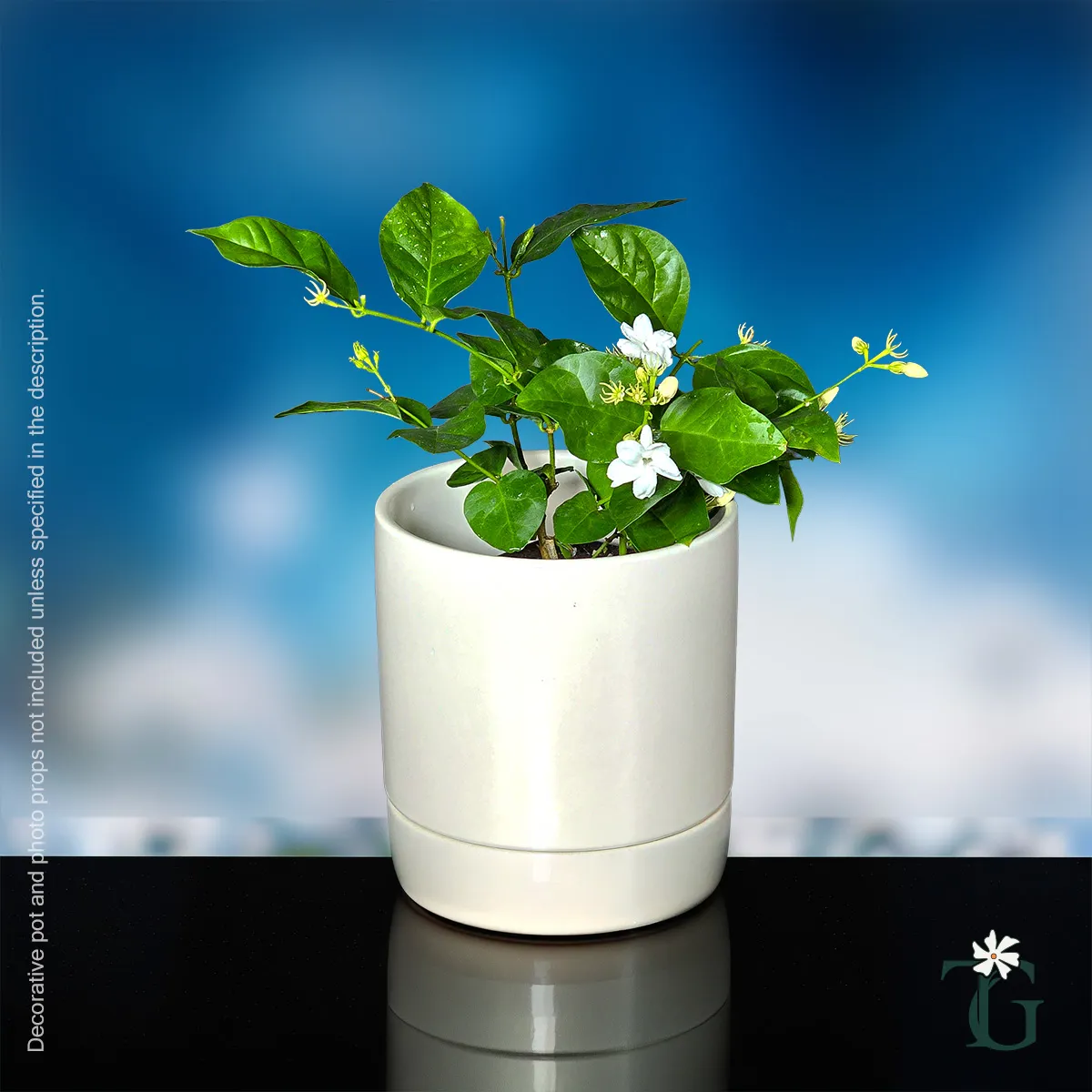
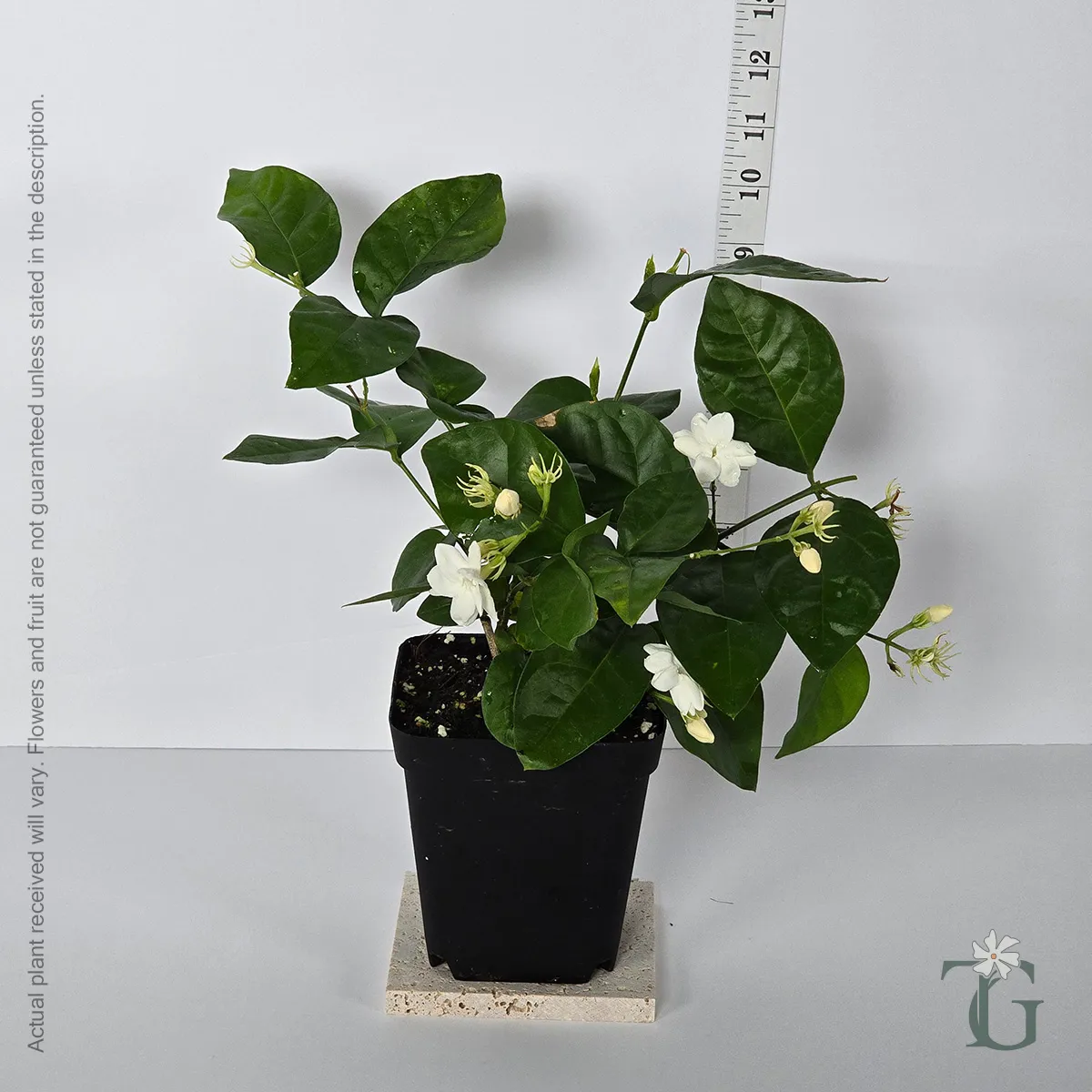
Arabian jasmine, commonly identified as Jasminum sambac, is a compact shrub grown for its highly fragrant white flowers. Depending on the variety, blooms may be single or layered, each opening gradually and releasing scent strongest in the early part of the day.
Why people keep it
- Daily interaction: flowers are often picked regularly rather than left on the plant.
- Fragrance close to home: scent is best experienced at arm’s length rather than across a garden.
- Cultural familiarity: associated with hair garlands, small offerings, and shared moments rather than display.
- Repeat blooming: under warm conditions, it produces flowers consistently through the season.
What to expect
Arabian jasmine grows steadily with warmth and responds well to regular harvesting. Blooming improves with sunlight and stable watering patterns. The plant remains compact with pruning, making it suitable for containers and small spaces.
How we grow and ship it
We grow Arabian jasmine for branching strength and root stability before encouraging heavy flowering. Plants are shipped while actively growing. After transit, allow the plant time to adjust before pruning or repotting.
Disambiguation & Cultural Notes
- Mogra vs jasmine: The term mogra typically refers to Jasminum sambac, which differs from other jasmine species grown primarily for ornamental display.
- Ritual use: Unlike Raat Ki Raani, Arabian jasmine is commonly used in pooja, garlands, and personal adornment.
- Fragrance tradition: The scent of mogra is widely used in attars and perfumes known for their soft yet lasting presence.
- Shared memory: For many, the act of threading flowers into a garland is as meaningful as growing the plant itself.
Practical Tips
- Prefers bright sunlight for consistent blooming.
- Regular picking encourages new buds.
- Avoid letting soil remain overly wet, roots prefer steady drainage.
- Light pruning helps maintain a fuller shape.