Our premise
Fragrance is not a switch you flip with fertilizer or a trick you learn from a reel. It is a signal that a plant is in the right relationship with its environment.
We grow for scent the way some people grow for fruit: deliberately, patiently, and with a clear sense of cause and effect. The goal is not the prettiest foliage. The goal is authenticity.
Why we don’t overfeed nitrogen
High nitrogen makes plants look impressive and smell ordinary.
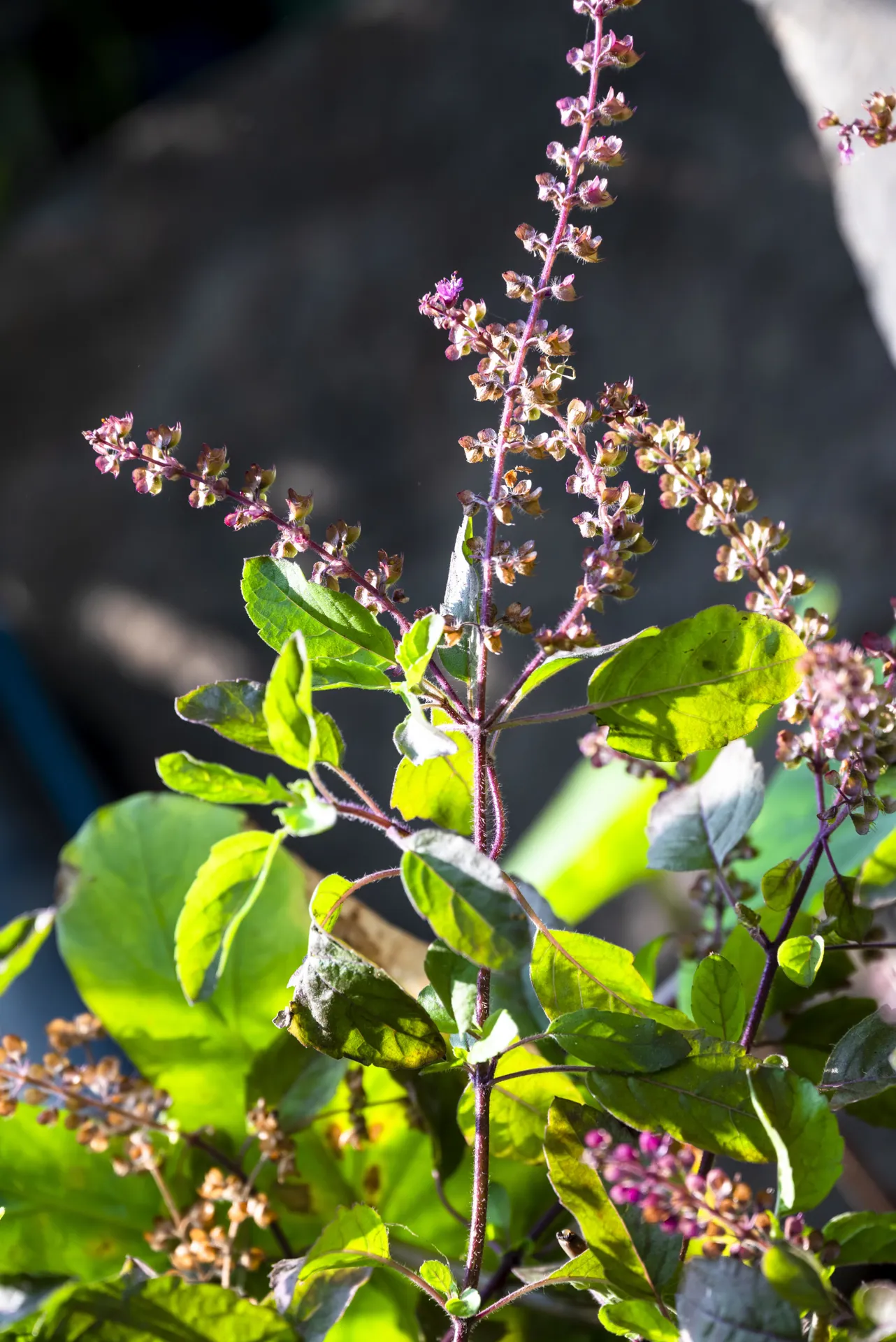
With tulsi, jasmine, raat ki raani, parijaat, rajnigandha, and juhi, heavy feeding gives you bigger leaves and weaker perfume. When nutrition is balanced, or even slightly restrained, the plant invests in oils, resins, and floral chemistry, which is where real fragrance lives.
In practice, this means steady, moderate feeding instead of aggressive growth boosters. We watch the plant more than we watch a schedule. If the leaves are lush but the air is silent, we know we are doing something wrong.
Why light, stress, and seasonality matter
Fragrance often arrives when a plant is alert, not comfortable.
Light as a language
Sun concentrates scent. Many of our most fragrant plants only find their full voice in strong, steady light. Bright shade makes them polite. Real sun makes them honest.
Warm nights, real performance
Night-bloomers do not care about convenience. Parijaat, raat ki raani, rajnigandha, and juhi respond to warm evenings, still air, and quiet spaces. That is when they open up and fill the garden.
Season as rhythm
A plant that smells the same all year is usually pretending. We expect fragrance to rise in warm months and soften in cool ones. That ebb and flow is part of the beauty.
Constructive stress, not neglect
A little dryness between waterings, real heat, and proper sun can sharpen scent. We give plants just enough pressure to wake them up, never enough to break them.
Why some plants get tough love and others get gentle care
Not every plant responds to the same kind of attention.
Tough love plants
Tulsi, raat ki raani, rajnigandha, many jasmines, and candlestick senna handle heat well. They tolerate brief dryness and often reward restraint with deeper fragrance.
We grow these with brighter light, leaner feeding, and good airflow instead of constant pampering.
Gentle care plants
Some vines and tender tropicals bloom best when they feel safe. For these, we emphasize steady watering, filtered light, and protection from extremes.
The simple rule is this: we match care to temperament, not to convenience.
How this shows up in our daily growing
We place plants by character, not just aesthetics.
Night-bloomers sit where evening warmth lingers.
We prune for air and light, because fragrance needs space to move.
We avoid gimmicks, no scent sprays, no internet shortcuts, no miracle additives.
If a plant does not smell like itself in our care, we change how we grow it, not what we claim it to be.
The line that guides us
Fragrance is proof of respect for light, for season, and for what a plant is meant to be.