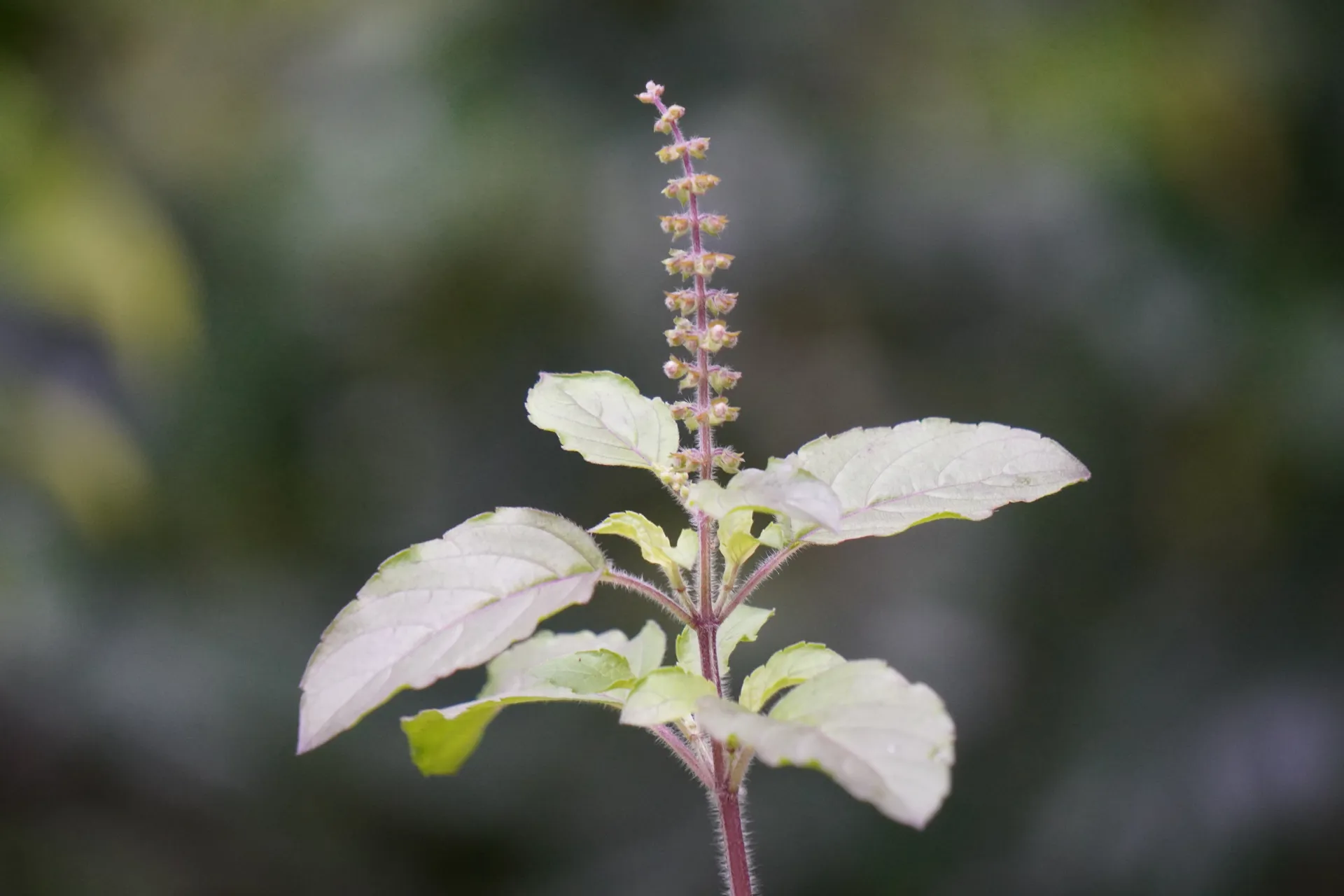
What tulsi really wants
Tulsi thrives when three things are steady:
light, warmth, and rhythm.
If you give it those, everything else becomes easy.
Light
Tulsi is a sun-loving plant.
- Give it as much direct sun as you can, ideally 5 to 7 hours daily.
- Strong light deepens aroma, improves branching, and keeps growth compact.
- In low light, stems stretch, leaves pale, and fragrance weakens.
Simple rule: if your tulsi looks leggy, it needs more sun.
Water
Tulsi prefers evenly moist soil, not soggy soil.
- Water when the top inch of soil feels dry.
- In summer, this may mean frequent watering.
- In cooler weather, let the soil dry slightly more between waterings.
Do not drown tulsi out of affection. Overwatering causes more problems than underwatering.
Soil and drainage
Tulsi wants loose, well-draining soil.
- A light potting mix with perlite or coarse sand works well.
- Heavy garden soil or waterlogged pots slow growth and invite root issues.
- Always use pots with drainage holes.
Good drainage is more important than fancy fertilizer.
Feeding
Tulsi responds well to gentle, regular feeding.
- Use a balanced fertilizer at half strength every 2 to 3 weeks in warm months.
- Stop heavy feeding when nights turn cool.
- Organic compost or worm castings once in a while are sufficient.
If growth is slow, check light first before increasing fertilizer.
Pruning and pinching
Pinching is how you shape tulsi.
- Pinch the growing tips regularly to encourage bushiness.
- Remove spent flower spikes to keep the plant focused on leaves.
- Avoid one drastic haircut, small, frequent pinches are better.
Think of pruning as conversation, not surgery.
Temperature and seasonality
Tulsi loves warmth and dislikes cold nights.
- Growth accelerates in hot weather.
- When nights dip below 60F, expect slower growth.
- Protect from frost, tulsi is not cold hardy.
Seasonal slowdown is normal, not a problem to fix.
Common problems and how to read them
Yellowing leaves
Often light or watering imbalance. Check sun first, then soil moisture.
Leggy growth
Almost always insufficient light.
Wilting despite wet soil
Possible root stress from overwatering or poor drainage.
Flowering too early
Usually a sign of stress or intense heat. Pinch back and stabilize care.
How we grow and ship tulsi
We ship actively growing plants, not exhausted big-box survivors.
Expect a short adjustment period after transit. Give light, warmth, and a steady watering rhythm before heavy pruning or repotting.
Good to know
Tulsi is happiest when you interact with it.
Small, frequent harvests and light pinches build a stronger plant than neglect followed by drastic cuts.
Tulsi rewards consistency more than intensity.
Practical Tips
- Put tulsi in your sunniest spot.
- Water when the top inch of soil is dry.
- Pinch lightly and often.
- Use loose, well-draining soil.
- Protect from cold nights.
- If something looks wrong, check light first, then water.