What soil is supposed to do
Soil has three jobs.
- Hold enough moisture so roots can drink.
- Let excess water drain so roots can breathe.
- Provide structure so the plant can anchor and grow.
If a mix does all three, it will work for most plants in your garden.
The simple rule
Loose, well-draining soil beats heavy, waterlogged soil every time.
If you remember only one thing, remember this.
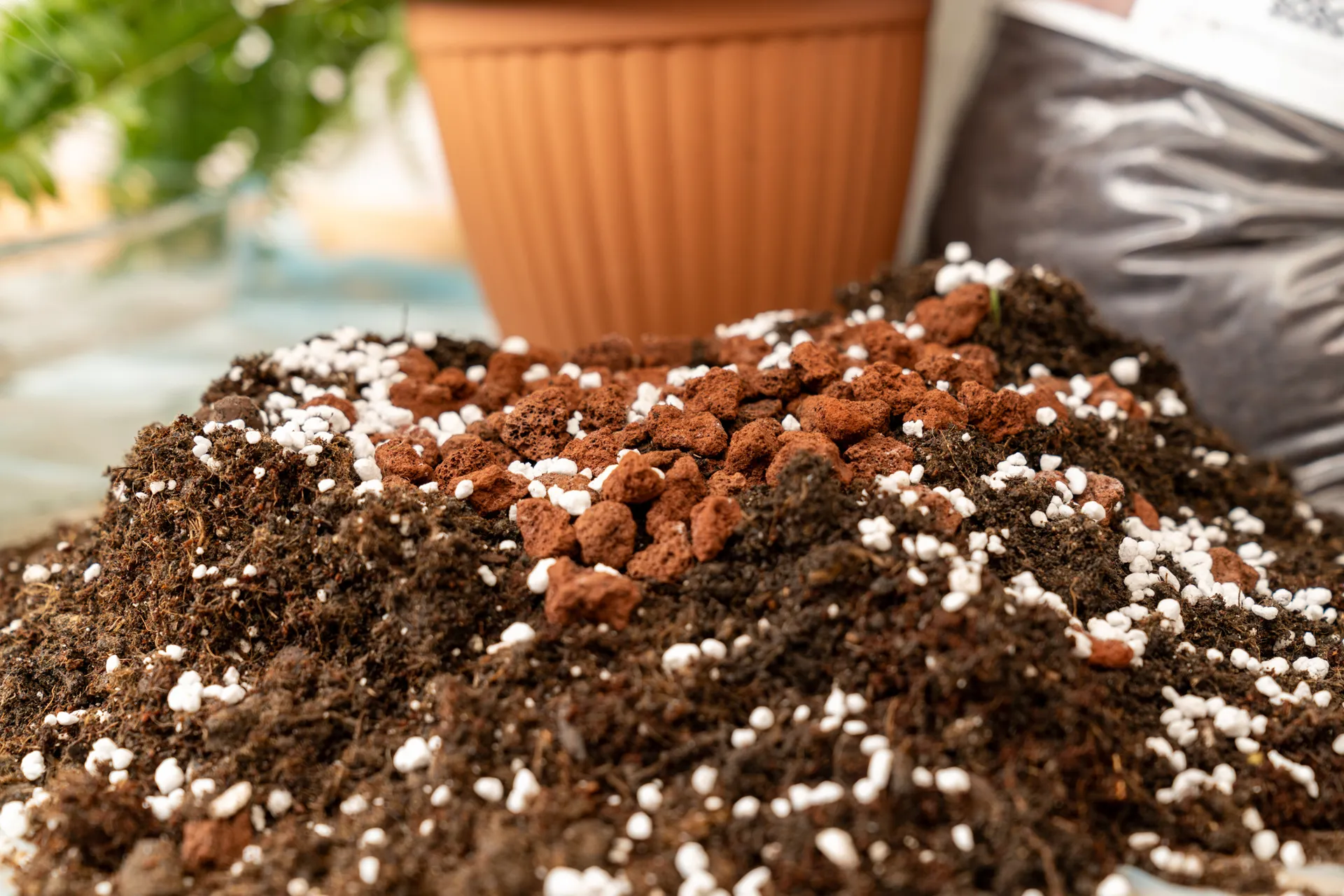
What a good potting mix looks like
A reliable starting mix for most tropical and courtyard plants is:
- 60 to 70 percent quality potting soil
- 20 to 30 percent perlite or coarse sand
- A small amount of compost or worm castings for life and nutrition
You can adjust this depending on the plant, but this baseline works for tulsi, jasmine, hibiscus, vines, and most heat lovers.
Drainage is non-negotiable
Always use pots with drainage holes.
Standing water at the bottom of a pot is the fastest way to stress roots.
If a decorative pot has no holes, use a nursery pot inside it.
Choosing the right pot size
Pick a pot that matches the root system, not just the canopy.
- If roots are crowded and circling, move up one pot size.
- If the pot is much bigger than the root ball, the soil stays wet too long.
- A jump of 1 to 2 inches in diameter is usually enough.
Bigger is not better. Right-sized is better.
How to repot without drama
- Water lightly the day before repotting so roots are pliable.
- Loosen the root ball gently, do not rip or shake aggressively.
- Place fresh mix around the sides, firm it lightly, not hard.
- Water once to settle the soil, then return to normal rhythm.
Do not fertilize immediately after repotting.
When to repot
Repot when you see one or more of these:
- Roots circling the pot or growing out of drainage holes.
- Water running straight through without soaking in.
- Plant drying out unusually fast.
- Growth stalling despite good light and feeding.
Spring and early summer are the best times for most tropical plants.
Common mistakes to avoid
Too heavy soil
Leads to root rot, slow growth, and yellowing leaves.
Too big a pot
Holds water too long and stresses roots.
No drainage holes
Almost always ends badly.
Repotting too often
Disturbs roots and slows growth.
How this connects to your plants
- Tulsi, jasmine, hibiscus, senna, yellow bells, mandevilla, vines all prefer loose, airy mixes.
- Vines and climbers appreciate good drainage even more, because wet soil weakens growth.
- Heat lovers perform best when roots stay moist but never soggy.
Practical Tips
- Use pots with drainage holes, always.
- Choose loose, well-draining mix with perlite.
- Upsize pots gradually, not dramatically.
- Repot in warm months, not during cold stress.
- After repotting, focus on light and steady watering before feeding.