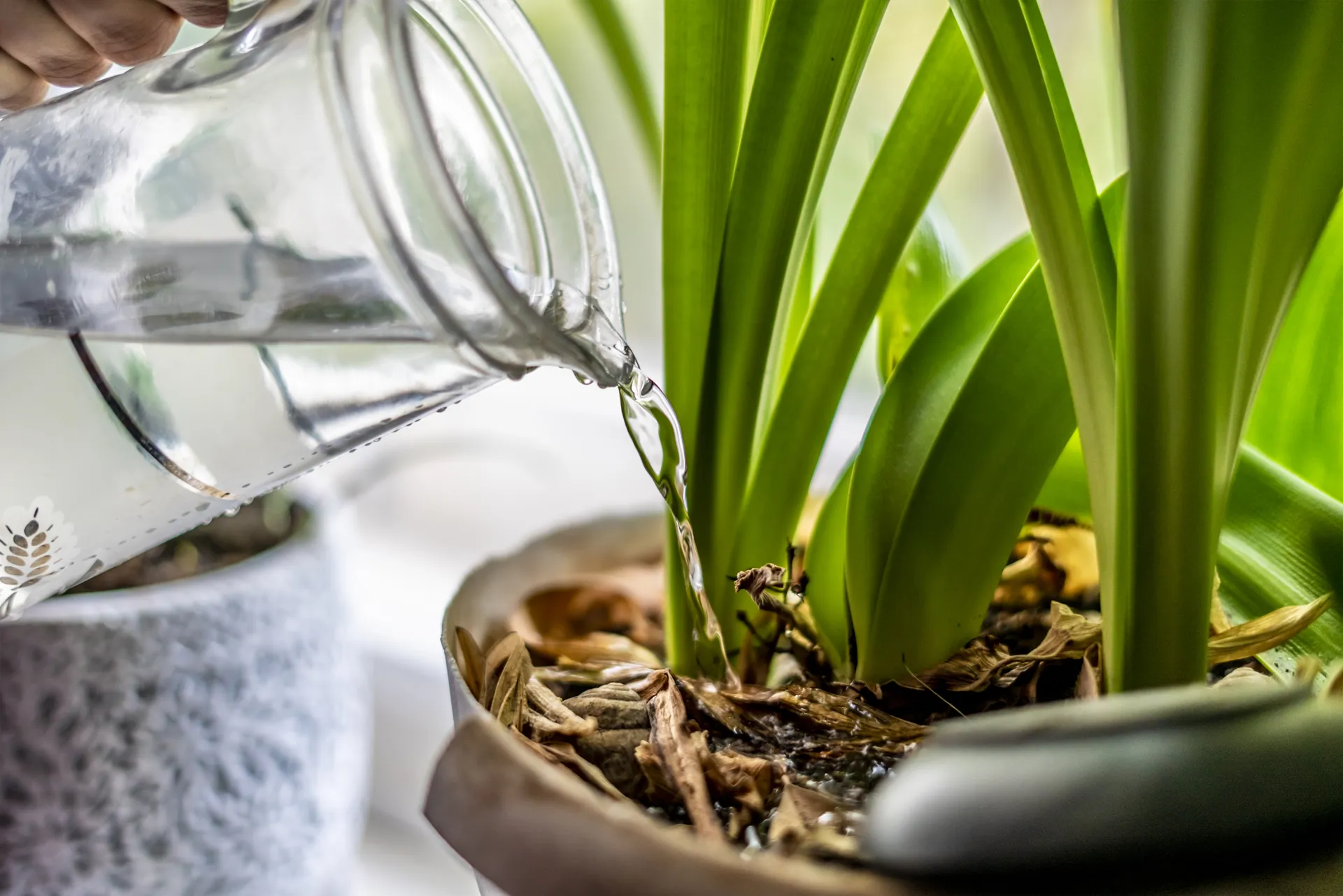
What watering is really doing
Water keeps cells alive and carries nutrients through the plant.
But roots also need air.
Too little water causes wilting and stress.
Too much water suffocates roots and invites rot.
Your goal is balance, moist but breathable soil.
The simple rule
Water when the top inch of soil is dry, not because it is Tuesday.
Conditions change every day. Your watering should too.
How to check soil properly
Use your finger.
- Push one inch into the soil.
- If it feels dry, water.
- If it feels cool and moist, wait.
For deeper pots, use a wooden stick or chopstick.
If it comes out clean and dry, water. If it comes out damp, wait.
How to water correctly
Water deeply, not lightly.
- Pour slowly until water flows out of the drainage holes.
- Let excess drain completely.
- Do not leave the pot sitting in a saucer of water.
Deep watering encourages stronger, deeper roots.
Pot size changes everything
Small pots dry out fast.
Large pots stay wet longer.
Expect to water small pots more often, sometimes daily in heat.
Expect to water big pots less frequently.
Same plant, different pot, different rhythm.
Summer vs winter rhythm
Warm months
- Faster drying, more frequent watering.
- Plants are actively growing and drinking.
Cool months
- Slower drying, less frequent watering.
- Plants rest, they need less.
If you keep watering winter plants like summer plants, you will cause problems.
Overwatering vs underwatering, how to tell
Signs of underwatering
- Leaves droop but feel thin and soft.
- Soil is clearly dry.
- Plant perks up quickly after watering.
Signs of overwatering
- Leaves yellow, not just droop.
- Soil feels wet for days.
- Plant looks sad even after watering.
- Musty smell from the pot.
If in doubt, wait a day.
Humidity and weather matter
Hot, windy days dry pots quickly.
Cool, cloudy days slow evaporation.
After heavy rain, you may not need to water for a while.
After heat waves, you may need to water more often.
Watch the weather, not the clock.
Common watering mistakes
Watering a little every day
This keeps the surface wet but roots thirsty.
Watering on a fixed schedule
Plants do not care about calendars.
Leaving pots in standing water
Roots drown, even if you meant well.
Watering without checking soil first
Guessing leads to trouble.
Special notes for your plants
Tulsi and jasmines
Prefer evenly moist soil, not soggy.
Vines and climbers
Drink more in active growth, less when cool.
Heat lovers and hibiscus
Need frequent deep watering in summer, much less in winter.
Night-bloomers
Steady moisture helps consistent flowering.
Practical Tips
- Always check soil before watering.
- Water deeply until it drains out.
- Adjust frequency with weather and pot size.
- Never let pots sit in standing water.
- If a plant looks unhappy, check water second, check light first.