What acclimation really means
Acclimation is the plant finding its footing in a new place.
New light, new air, new temperature, and new handling all stress roots and leaves at once. Temporary sulking is normal. Collapse is not.
Your job is stability, not heroics.
The first 7 days, what to do
Day 1 to 3
- Place the plant in bright light, not harsh midday sun.
- Water lightly if the mix feels dry, do not soak out of sympathy.
- Do not prune, do not fertilize, do not repot.
Day 4 to 7
- Gradually move toward the plant’s preferred light.
- Resume normal watering rhythm.
- Watch leaves more than the pot.
If the plant is still upright and responsive, you are winning.
Signs the plant is settling in
- New growth begins, even slowly.
- Leaves stop drooping or curling.
- Color stabilizes instead of fading or yellowing.
- Soil dries at a normal pace for the plant and pot.
This is when you can think about repotting, if needed.
When to repot, the honest triggers
Repot only if one or more of these are clearly true.
- Roots are circling the pot or visible at drainage holes.
- Water runs straight through without soaking in.
- The plant dries out unusually fast despite regular watering.
- Growth stalls for weeks even with good light and feeding.
- The pot is obviously too small for the canopy or vine.
If none of these are present, wait.
When not to repot
Do not repot if:
- The plant arrived stressed or wilted.
- Nights are cold or you are in winter.
- The plant is in active heavy bloom.
- You are repotting out of anxiety, not necessity.
Waiting here is a form of care.
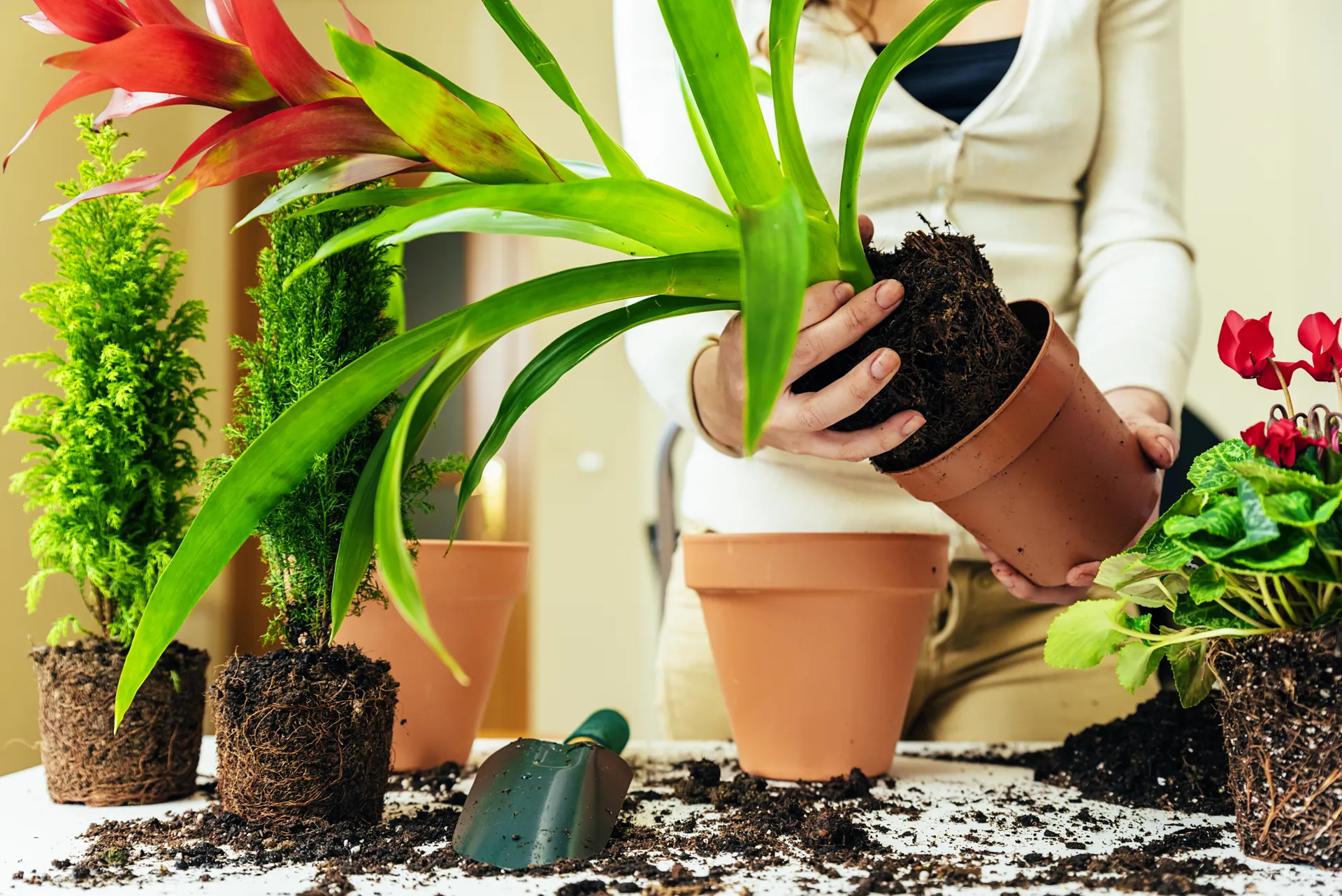
How to repot without drama
- Water lightly the day before so roots are pliable.
- Choose a pot only 1 to 2 inches larger in diameter.
- Loosen the root ball gently, do not rip or shake hard.
- Set the plant at the same depth as before.
- Add fresh, well-draining mix around the sides and firm lightly.
- Water once to settle the soil, then return to normal rhythm.
Do not fertilize immediately after repotting.
How big is “too big”
Bigger pots hold water longer.
If the pot is much larger than the root ball, roots stay wet and stressed.
Rule of thumb: upsize gradually, not dramatically.
Right-sized is better than big.
After repotting, the next 7 days
- Keep light bright but gentle at first.
- Maintain steady watering, avoid soaking.
- Do not prune or fertilize unless absolutely necessary.
- Expect minor leaf drop or slowdown, that is adjustment.
If new growth resumes, the repot worked.
Special notes for common plant types
Tulsi and jasmines
Prefer to settle before repotting. Warm months are best.
Vines and climbers
Repot before they get too top-heavy, then provide strong support immediately.
Heat lovers and hibiscus
Handle repotting well in warm weather, poorly in cold snaps.
Night-bloomers
Repot after a bloom cycle, not during peak flowering.
Common mistakes to avoid
Repotting too soon
Shipping stress plus repotting stress is a double hit.
Jumping to a huge pot
Leads to soggy soil and unhappy roots.
Fertilizing right after repotting
Burns fresh roots and slows recovery.
Overwatering to “help”
Usually hurts more than it helps.
Practical Tips
- Give every new plant at least a week to acclimate.
- Repot only when there is a clear reason.
- Upsize pots gradually, 1 to 2 inches at a time.
- Repot in warm months whenever possible.
- After repotting, focus on light and steady watering before feeding.